The nucleus method is good if you don’t have much spare equipment and you plan on uniting the colony back to one again.
This method may sound similar to the artificial swarm however its the other way around. In the artificial swarm you moved the parent colony away and left the queen and the flying bees on the original site. In the nucleus method you are removing the queen, a little brood and young bees and leaving the colony where it is.
You need a nuc box or full size hive with dummy board (so you can reduce the space the bees need keep warm). You have queen cells and your queen is still there. Find the queen and take her on the frame she is on, which most likely will have eggs, and also take another frame of sealed brood and a frame of food. If you are using a nuc box fill the rest of box with frames, drawn comb if you have it, foundation if you don’t but remember to feed them with syrup! You will also need to shake in a couple of frames of bees, you need to compensate for the flying bees that will return to the parent colony. Tomorrow check this nuc to ensure you have enough bees to cover the brooda and look after the colony. If one of your frames of brood had emerging brood on it then you will soon have new young bees in here as well.
The parent colony is inspected and all but one good open queen cell is removed. It is best to find your good cell first before you destroy all the others. You will need to check this colony a week later and remove any new queen cells your bees may have started, so do mark the frame that has your good cell on it so you don’t accidentally remove that one! Once you have only 1 queen cell and no way for the bees to make more you can leave the bees get on with it. All being well the new queen will emerge and go on her mating flights and start to lay. This can take a few weeks and you do not want to disturb them during this time. I always leave mine for a good 3 weeks but I do keep an eye on the entrance. If the bees are bringing in pollen this is a good indicator that all is well. When you do check them, you should see some eggs. If you don’t see eggs look for polished cells as this means the queen is imminently going to start laying.
Your nuc will also be growing in size over these three weeks, so you now have the option to keep this as a separate colony and hive it when necessary and increase your number of colonies. Or, you can unite this back with your original colony using the newspaper method.
Thanks to those that pointed out to me about the broken links in Swarming-Management; Prevention & Control. I made an error on timings; the subjects are not yet published which is why the links are not working – rookie error!!
Nucleus Method is due to publish this Wednesday 1st March 2023
If you have honeybees, you have a duty of care for them and that includes some sort of swarm control. You must also assume that your bees will swarm every year. Why? I hear you ask. Well, swarming is the way honeybees naturally produce. Every year I get the odd customer who is buying bees from us, ask me if they can have bees that don’t swarm. The answer is no, all honeybees swarm, it is an essential part of their life cycle, if we were to breed bees that don’t swarm that would lead to there being no honeybees.
So, it is essential that as part of your honeybee management that you plan, learn, understand, and have the equipment to carry out at least one swarm control method. The idea being that if you carry out regular inspections on your bees, give them enough space at the right time, you will reduce the chances of them swarming at all because you will be in control of what is happening within the colony. However, you won’t always get it right so you must be prepared for them to lose a swarm now and then. Even if you do give them all the space in the world, a colony will still swarm as this is their natural way of reproducing just like every other animal on the planet.
Prevention – When we say Swarm Management and use the word “Prevention”, this means controlling what is happening within the colony to give them space, and therefore prevent them from swarming. The most obvious thing, at the beginning of the season, is to add supers so that the bees have storage space to put all that lovely nectar they are foraging for. You also need to keep an eye on the free space in the brood box. A good colony will move honey up from the brood box, into the space above, to allow more free cells for the queen to lay in. However, sometimes we need to help them. If your bees are actively bringing in nectar and filling supers but you have full frames of food in the brood box, which is taking up valuable laying space, you can scrape the capping off these cells which will encourage the bees to move the honey up. Or you can remove them and replace them with drawn comb, if you have it, or if not, then give them frames with new foundation.
If your colony is expanding its brood nest at a rate of knots, you will either need to offer more space for brood to be laid by adding another box, you can double brood or brood and a half: this is where you use a super as part of the brood box. This will allow more space for the brood nest to expand. If, however, you do not want to run the colony this big but want to do something to prevent them from swarming, due to lack of space, you will need to remove some frames of brood and bees and thus reduce the colony size. This will mean making up a new smaller colony as a swarm prevention method – Nucleus method. Leave the queen in the original colony to carry on, either let the nucleus make its own new queen or, if you have another colony that you have had to do swarm control on, you can take a queen cell from that and carefully press it into the top of the brood frames. Personally, I don’t like this method, but it will gain you at least 8 days for this colony to become queen right. You will need to go through the colony and remove any other queen cells they start to make, and of course, there is every chance they may pull down the queen cell you put in. If this happens just let them make their own queen. Alternatively you can introduce a mated queen to this colony, advice on how to do this can be read on my page How to Introduce a Mated Queen.
Control – When we say Swarm Control, this usually refers to how we carry out a control method on a colony that already has swarm cells, and, if left to its own devices, the colony will swarm. By controlling the swarming process, we will allow the colony to swarm, but we have the control. By controlling it we won’t lose the swarm and it will not be a nuisance, or a danger to others. You may laugh at me using the word danger but remember; your neighbours may not be quite as keen on honeybees as you are! To some people a swarm of honeybees will be very scary, so, if you have honey bees, you have a responsibility to control them. Having said that even the most skilled beekeepers and bee farmers will lose the odd swarm here and there.
I have a post that explains an artificial swarm control method that is quite simple, and you should have all the equipment you need. There are other methods such as the Demaree, which can sound quite complicated but in reality it’s not, you just need more specialist equipment. The Demaree has been modified over the years and there are now a few other versions to the original method. We use a modified version ourselves. I will write a post on this another time.
Another control method is to remove the queen from the colony to make up a small nucleus. This may sound like the artificial swarm however it’s the other way around. In the artificial swarm you are removing the colony, and leaving the queen on the original site where the flying bees will return. In the nucleus method you are removing the queen, a little brood and young bees from the colony. The original colony is left with a queen cell, or left for the bees to make a new queen if they haven’t already thrown up queen cells. I don’t use this method as I find it less affective and a lot of the time original colony still swarms a little later in the season. You can read about the Nucleus method of swarm control in a separate post.
Summary – You need to plan ahead as to how you are going to manage swarm prevention. Always remember though, no matter what method of prevention you use, if your bees need to go through a natural reproduction method, no amount of space or manipulation will prevent this. So, make sure you are equipped and ready to carry out a swarm control method. It is not fair on others to just allow your bees to swarm and cause a nuisance.
If you are reading this the chances are you have lost your bees over winter, you are feeling upset and saddened and you want to know why they have died and most beekeepers think “What did I do wrong?”
There are always winter losses and there are many reasons why colonies don’t make it through winter. It stands to reason that the more colonies of honeybees you have the more likely you are to suffer with winter losses and it may not be anything you have done so before you go blaming yourself see if you can see why the colony has died. It may be that you can’t work out what has happened, below I have given some examples of winter losses.
Starvation – there are two types of starvation, one is beekeeper error, you took too much honey off your bees and didn’t bother to check them through the winter and they have starved. The bees will be found with the heads in the cells because they are desperate for food. This is your fault entirely and yes you should blame yourself, this was completely avoidable and its because you were greedy – sorry but that is exactly what this is. The early spring is often when we see this, the bees become active, the beekeeper sees the bees flying and assumes they are collecting nectar. Well have a look around you, how much flower is there and is it warm enough for the nectar to flow. Yes they are bringing in pollen, but they need nectar and now they are active and the queen is laying they need more and more of it. They will be eating more than they can forage and so they starve.
The other starvation is “Isolation Starvation“. This happens when the winter cluster of bees moves away from food instead of with it. The result is the same, dead bees with heads in cells but you will also have frames of food in the brood box and even more sadder is that the food may only be a couple of inches away from the dead cluster. This is not your fault, do not blame yourself, there is nothing at all that you could have done to help these bees. Sadly nature has a weird way of working at times.
Queen issue – If your colony was queen-less going into winter they are not going to survive, even if there are still some alive in early spring they are not going to live long enough to support the colony until you can get a new mated queen to go in with them. If you are lucky enough to find mated queen early the bees will be too old to support her. It could be that you had a late supercedure happen and she didn’t manage to mate. A colony with a drone layer is not going to make it, again this may make it through winter but, sad as it is, the colony is doomed.
Varroa / Unhealthy colony – An unhealthy or stressed colony is unlikely to make it through winter. Varroa causes much stress on a honeybee colony, to avoid high varroa levels going into winter make sure you treat your bees at the end of the season. I have a post on Varroa which will give you much more information on this topic. Make sure you look at the brood throughout the season to see that it looks healthy. Also look at your bees, do they look healthy? Varroa damage can be seen at larvae stage and also at capped stage, your bees will detect infected cells, they will uncap them and remove the infected larvae, so look for chewed cell capping’s. You could take some blame for this if you didn’t treat your bees.
Unusual winter with temperature changes – With climate change we are seeing winters with more and more temperature fluctuations. The bees cluster in winter during the cold weather, if we have warm days they will break this cluster and maybe even go out to forage in the warmth of the sun. The winter days are short and the temperatures drop quickly, this can have a big affect on the bees, some won’t make it home because they get too cold and in the hive they may not make it back to the main cluster and they may die from the cold. A small weak colony will almost certainly die in a big hive as they won’t be able to generate enough heat. You definitely can’t blame yourself for this, no one can control the weather!
Predators – Mice are big winter predators to honeybees, the bees offer a lovely snug warm environment with lots food for them! If they get into the broodbox they will cause lots of stress to your bees. By fitting a mice guard or simply reducing the hive entrance to a single bee space you can stop mice getting into the brood chamber.
Moisture – moisture by way of condensation can cause detrimental effects at any time but especially during the cold winter months. Make sure your hives have appropriate ventilation, many beekeepers make the mistake of covering both holes in the crownboard, this stops the airflow and causes condensation. This may cause the demise of your colony. If you think your bees have died due to excess moisture have a look at the hive ventilation and also look at the location of the hive, does it very wet/damp where the hive is located?
Blocked entrance – Your bees need to be able to get out of the hive, even in winter they will take short cleansing flights if the sun is out. If the entrance is blocked by something they won’t be able to get out. It could be heavy snow fall causing the blockage or it could be early spring, there will have been natural bee deaths over the winter months and if the colony was big going in these numbers will also be big and could block a small entrance.
There are three different castes of bees in the hive. It is important to distinguish and understand the purpose of each of the castes as it will help you indicate issues in the hive whilst doing your hive inspections.In this post we will explore the different castes, their brood and life cycle and their importance in the colony. I’m going to try to be brief and avoid going into too much detail about the anatomy, we might have to do an advanced caste class later on!
The Queen
Bee-utiful and Dreamy Queen
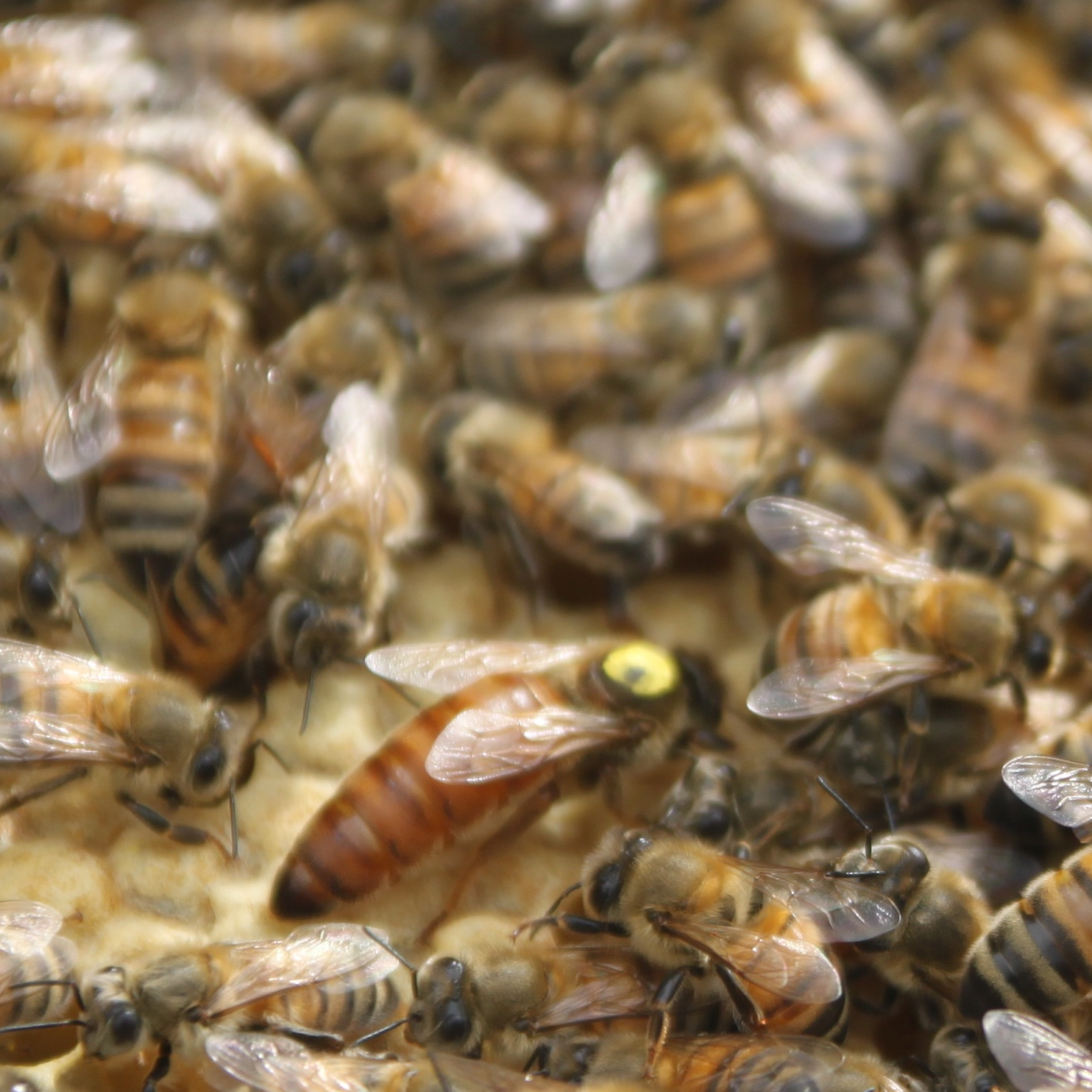
The queen is the largest bee in the colony and her purpose is to lay eggs to increase population size and consequently productivity and strength. A queen is produced using initially the same egg as a worker bee but during the larval stage the workers start to be fed bee bread, whilst the future queen is fed royal jelly until her cell is capped over at 9 days.
Once the virgin queen hatches and establishes herself in the colony she is encouraged by the workers to swiftly get mated. A queen can fly out multiple times to mate, but she should mate with about 8-10 drones before settling in the hive and ‘plumping’ up.
When a queen starts laying eggs, the brood pattern can look a little erratic. She can also sometimes lay multiple eggs in a cell before she gets into the rhythm of her work. The queen does not feed herself and instead relies on nurse bees to feed and care for her in a process called trophallaxis – the interchange of food between the bees which in turn stimulates the spread of her pheromones (mandibular pheromones) throughout the hive.
The queen is extremely important to the colony, as she is the one who ultimately controls the population. You may have as many as 60,000 workers and perhaps 700 drones. In response to the amount of forage, stores and nurse bees within the colony she will slow down or increase her laying, though that being said modern queens bred for prolificness can sometimes ignore these natural instincts. Without the queen, the workers can change behaviourally, becoming a little more irritable (roaring) and putting honey into what would usually be a space reserved for brood.
Queens however are not seen as irreplaceable in the eyes of the workers. When the queen gets older her laying becomes slower, or she starts laying more drone (indicating that she is running out of sperm stores) then the workers will supersede her by making a queen cup for the queen to lay in. In supersedure cases the queens can live side by side for a while until the new queen becomes more established in the colony and eventually the workers will kill the old queen.
The Worker
Isn’t she lovely?
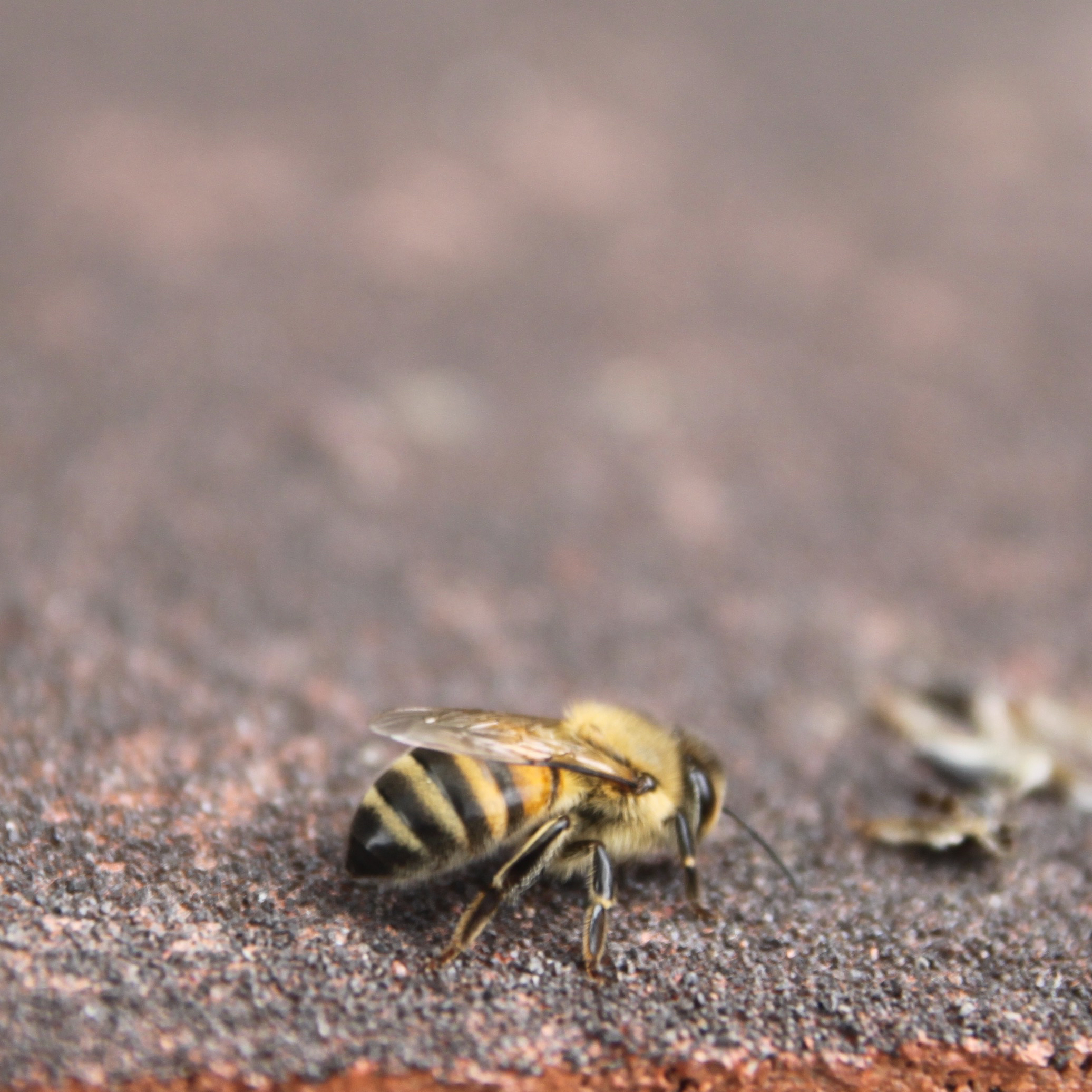
The worker bee is just that, a bee that works. And depending on her age, she has many different roles in the hive. When she first hatches out of her cell, which she does by biting around the capping, she is lighter in colour and more hairy (a ball of fuzzy cuteness) than her older sisters. Initially workers cannot sting and her glands are not working so the only job she can do is the cleaning up and this will be her first job for the first 3 to 4 days of her life.
During this time she is fed by the other bees and her body develops fully. Her exoskeleton hardens and her hypopharyngeal glands begin secreting a substance that is important to the composition of royal jelly fed to the young larvae. Around day 5 she will take her first flights outside of the hive to orientate herself. Once the worker is mature she will then do a variety of duties within the colony; cleaning, feeding larvae, processing incoming nectar, wax building and guard duty. She can do any of these jobs at any time and simply responds to the demands of the colony. When the worker bee carries out these indoor duties for the first 3 weeks of her life, we refer to her as a nurse bee or house bee during this period.
Beyond the first 3 weeks of her life she becomes what we call a forager or flying bee. She will leave the hive to collect the necessary resources that the colony needs to survive. They have a dangerous and tiring job and work from the time the sun is up until sunset. The forager will collect nectar, pollen, water and propolis. Most adult bees at the end of their life will die whilst out foraging rather than in the hive.
The Drone
Drones and workers
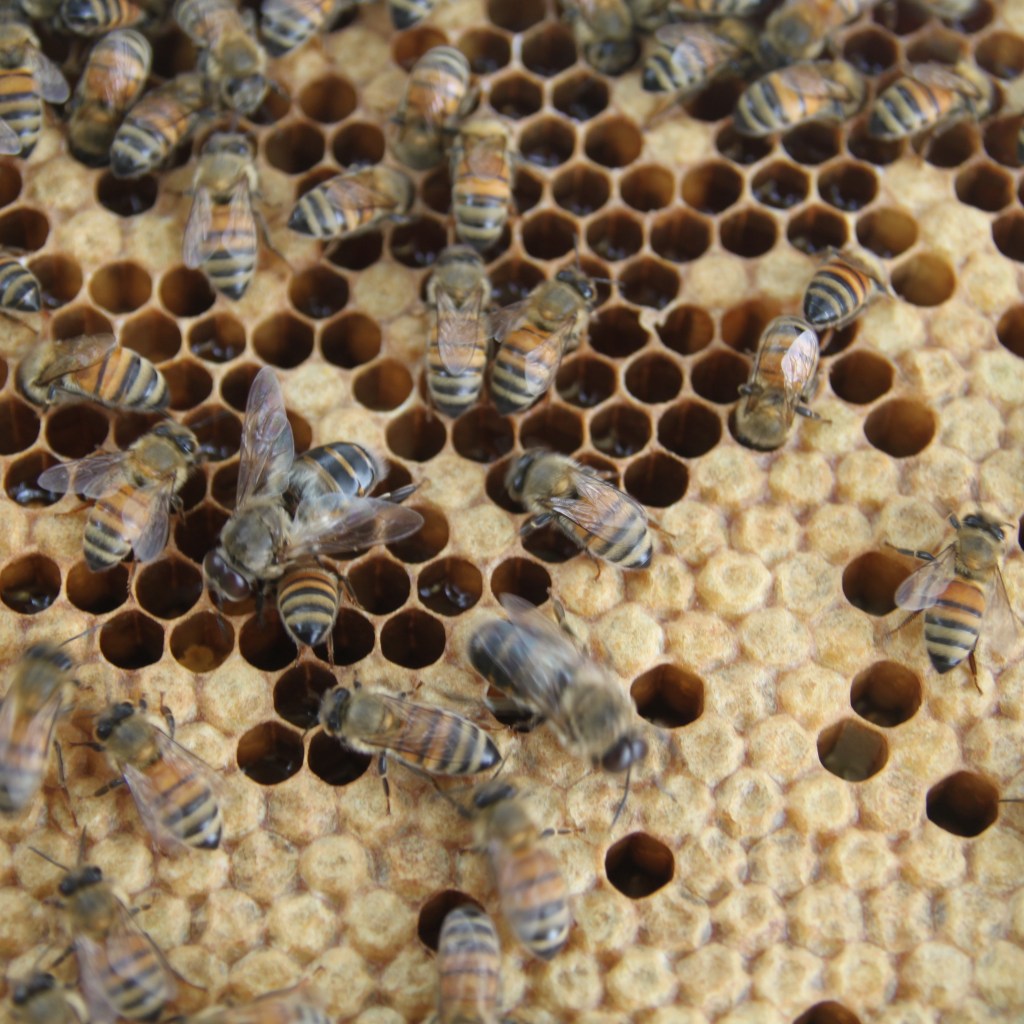
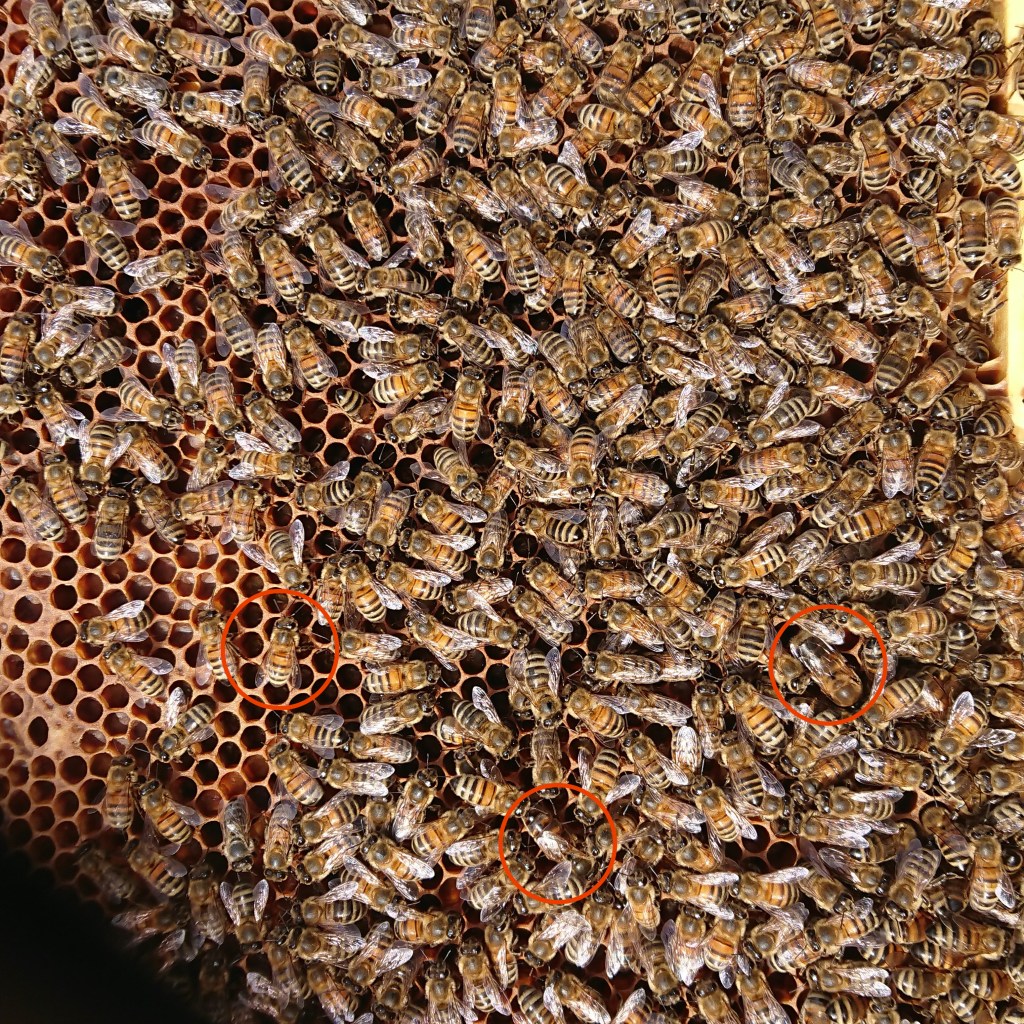
Drones are the larger and rounded bees hanging around hives. You see them from spring through to summer and they hang out at Drone Congregation Areas hoping to catch a queen on her mating flight.
A primary focus for a drone is to mate with a queen. He waits high above the ground in a drone congregating area waiting for a queen. There may be hundreds or even thousands of male bees all hanging around ready to compete to mate with a queen. They don’t fight to compete, they don’t even have stingers, they simply see who can fly closest to successfully mate.
The mating is carried out high up the air and once complete the drone will do a rather spectacular back flip off the queen. The drone leaves part of himself in the queen and therefore this is the end of the drones life.
Drone brood is normally laid at the bottom frames, where there is slightly more space for bigger cells and is often domed making it very different from the flat worker brood.
Drones are often referred to as lazy when it comes to work around the hive. However, if temperatures rise really high inside the hive all bees, including drones, may help with the cooling effort by flapping their wings.
At the end of the summer months any drones left in the colony will be kicked out by the workers and not allowed to return. They do this so that the drones don’t eat their winter stores instead of the more important worker bees. You may find that the drones will sneak into weaker colonies at this time of the year. Drones also serve another purpose us beekeepers. When we start seeing them in the early spring we know the swarm season has begun. Some also uncap the drones as a varroa check.
Brood Cycle
From left to right, worker, queen and drone
source: blogs.evergreen.edu
One of the essential reasons beekeepers know the brood cycle is because of the three day rule. This refers to the ‘egg’ stage of the brood cycle, as you can see above all three castes remain in the egg stage for three days. The implication is that if you see eggs (that are laid properly) you can guarantee that your queen was alive and laying at least three days ago. It is therefore not a necessity to actually see your queen (as long as she is not on the frame you’ve left outside the hive whilst doing your inspections). In the same vein, it can also help you determine how long your colony has been queenless for, have you only got sealed worker brood in the hive? You’ve been queenless for at least 9 days but can be a up to 20 days!
Knowing the brood cycle also allows you to have a good picture in your mind how close your worker brood is to hatching and expanding your colony by the thousands. Queens tend to lay in a regular pattern, from the middle of the hive, the middle of the frame outwards in circles. There are some incredible photos out there that help identify the age of capped larvae/pupae, namely the colouring of the eyes and the body if you’re really curious how close your brood is to hatching.
If you’re into your queen rearing some only think about the relevance of the queen’s brood cycle because of their grafting schedule, but really it is also helpful to know and observe the drone’s cycle, as you can coincide your rearing by calculating the time it takes for your drones to mature after your drone cells have been laid in. This will help to ensure the Virgin’s mating flights when there is a good proportion of mature drones in the area. This is definitely a bit more of an advanced beekeeping practice though!
In Summary
That’s only scratching the surface of the amazing differences and roles of the honeybee castes. There is an incredible amount of literature regarding the more technical and anatomical aspects of castes but I certainly don’t think they are that relevant to beginner beekeepers. This should give you a good basis of knowledge to build upon, and you should be able to confidently identify the castes when you are going through your colonies.
Most beginners and non-beekeepers mistake drones for queens quite often, this is pretty normal and once you have been beekeeping for a while you do wonder how you ever made that mistake to begin with since they look so incredibly different!!



 Beckys Beezzzs