Blog

Beginner’s FAQ: How to Introduce a Mated Queen

The time has come for an amazing demand for mated queens, it happens every year and we’re always put under a tremendous amount of pressure when our wonderful queens are ready for sending out to our customers all over the nation.

Now, in our own time as beekeepers and selling queens to fellow beekeepers we’ve gathered some interesting stories of how some inexperienced beekeepers have attempted to introduce their queens, therefore we’re going to show you (with photos!). Honestly, if you don’t laugh about these tales, you might just burst into tears.

First thing before ordering a mated queen is to be sure that your colony is really queenless (or you may be ordering a queen to make splits or requeen), read our blog post https://beckybees.blog/2020/02/26/beginners-faq-my-colony-is-queenless/ to make absolutely sure that you need this queen!

Are you really queenless?

Second thing you need to know is that queen introduction methods are NOT GUARANTEED. There are many ways that you can increase the chance of acceptance, but sometimes the colony just want to make a new queen, so a broodless colony may even let the new queen lay only to cull her and raise a new one of their own.

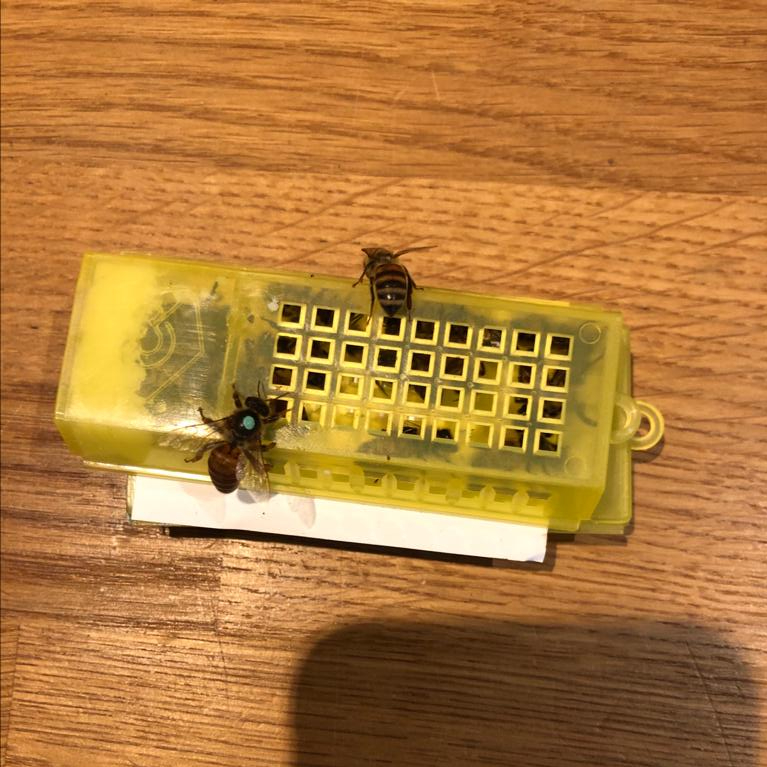
Your queen will be posted to you in a cage which has a section full of fondant. She will also have attendant worker bees with her. She will either arrive in an envelope with holes punched into it or in a cardboard wrap, there will be a sticker on the outside to let the postman know the package contains live Queen Bees.

The part of the cage that holds the fondant has a tab that needs to be removed to expose the fondant so that your bees in your colony can eat through it which will allow the queen to exit the cage. Use your hive tool to snap/remove this seal, be careful that you don’t accidentally remove the top cover. If you are planning on doing a delayed release leave the seal in place but remember to go back and remove it!
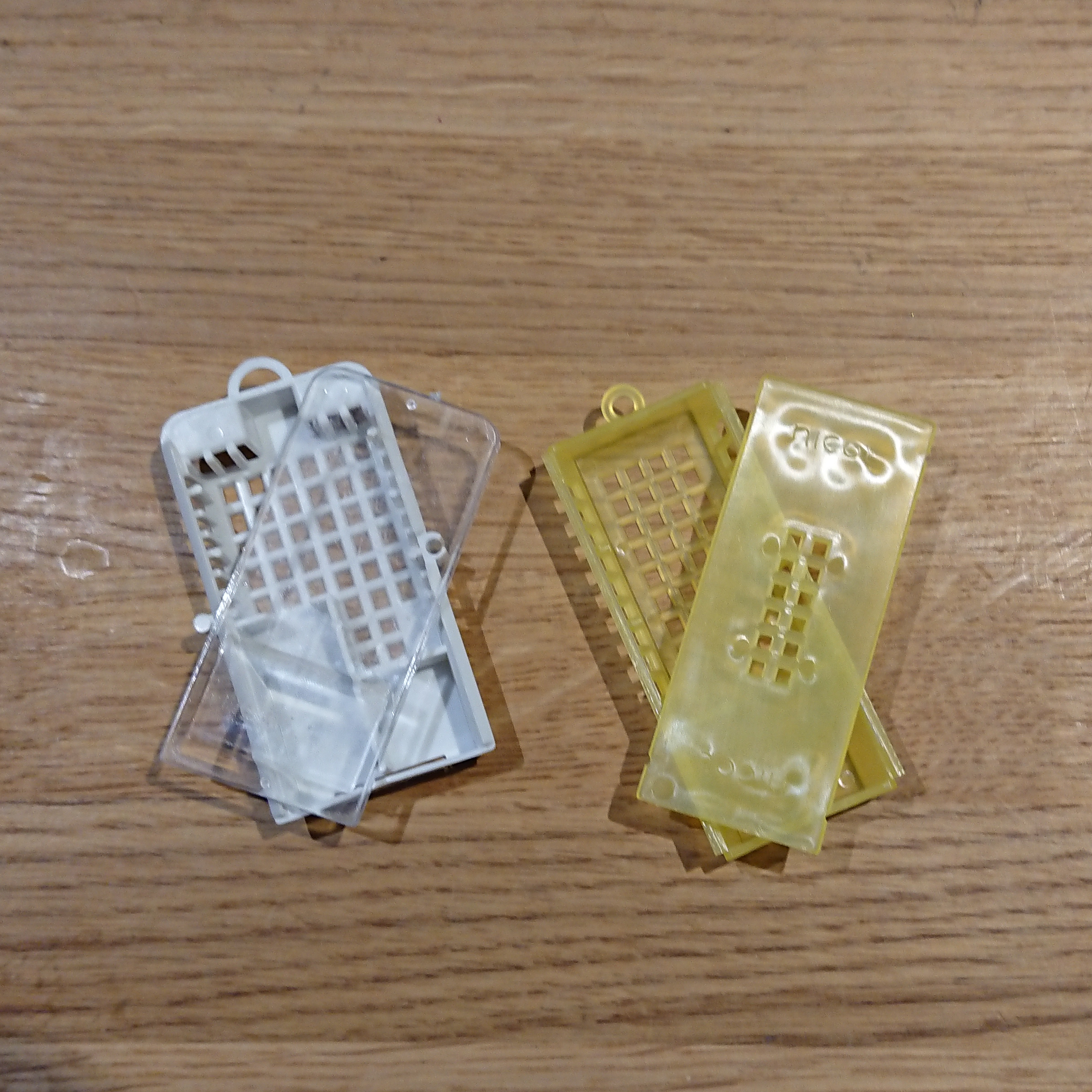
An easy mistake if you’re too forceful

The rectangular cages have a little hook at the top which would suggest that you are able to thread through a toothpick and hang the cage between the frames. HOWEVER we do not recommend that you do this because there is the possibility that if the attendants in the cage could die they may block the access to the fondant within the cage. The best thing to do is nestle the cage lengthways between the top bars of the two middle frames. See picture further down in the blog.

You may look at your caged queen and think the queen looks smaller than you were expecting, and she may be. This is because when queens are removed from a colony, she will begin to slim down due not being fed at the constant rate as when she is in a hive. The same occurs prior to swarming and therefore you must realise that your mated queen may well also have regained the ability to fly! We once had a customer in tears who tried to introduce the queen outside and had opened to cage to take her out only to watch her fly away. All queens are harvested when they are on sealed brood and therefore they have demonstrated their laying ability to of laying fertile eggs.

Caged queens may appear a lot smaller than when you see one in a colony and it may take a while for them to plump up again.

Some beekeepers like to remove the attendant workers prior to introducing their queen to their hive, the theory behind this is that the attendants will clash with the other workers and will cause the hive to reject the queen. If you do want to do this, make sure you are in a closed room, by a window, and carefully remove the attendants. All the bees should attempt the escape through the window, and this is just a precaution in case your queen happens to get out too, just carefully pick her up by the thorax and reintroduce her to the empty cage.

If you’re scared to pick the queen up, then partially remove the cover and place over your queen when she is crawling on the window, then carefully slide the cover back into place.

Now that you are ready to introduce your queen, go through the hive and ensure that you remove all queen cells and cups. If you have not already done so you will need to remove the tab (if the cage has one) to expose the fondant the bees in your hive. Some beekeepers do like the put the queen cage in with the tab sealed for a 24 to 48 hours before they remove the tab, this delays the queen being released and this is down the personal preference. It can be an advantage to leave the cage sealed and return in a couple of days to remove the tab and you can also check to see if the colony has also made queen cells; a small percentage of colonies will make cells even though you have put a queen into the colony. By leaving the cage sealed and returning you have the chance to check the brood frames and remove any cells if they have been started. It also gives you the chance to see if your colony has killed the queen whilst she is in the cage. The bees will do this if you already have a queen in the colony that you were not aware of. We don’t always have time to go back to our colonies so when we put the queen cage in we remove the tab straight away. When we introduce a queen, we put the cage where most of the brood is (and therefore more nurse bees). Nestle the cage sideways between the frames tightly just as we have shown in the picture below.

Be careful not to squish any bees!

The queenless colony should rush towards her and show a healthy interest in her presence. You may see the workers attempting to feed her and in turn spread her pheromones. If your bees start balling the cage you may have another queen present in the colony and you must give your colony another thorough check. Remember that virgin queens move quickly, they may be smaller and they won’t be marked.
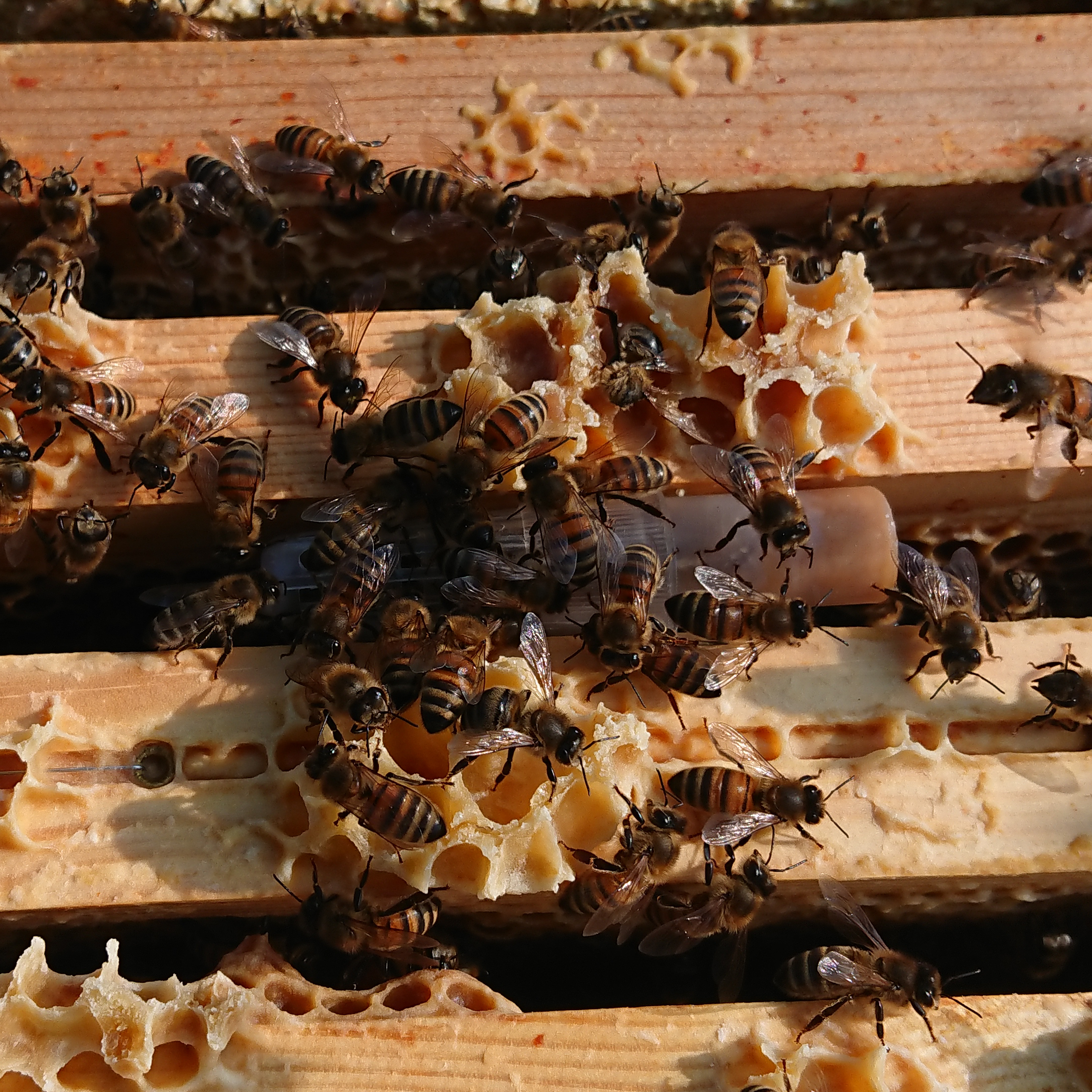
Healthy interest in the new queen

If you’re really stumped as to the difference, between healthy interest and balling, because a lot of bees can get interested in the new queen, then the most definitive test for me is to see how easily I can remove the bees from the cage by running my finger over the cage to move the bees. If they’re difficult to remove they are probably attempting to sting the queen through the cage. This is very similar to how difficult it is to remove a bee a bee trying to sting you through your veil! We took a photo of the cage balling to demonstrate but it can often look a lot worse, we just chose to remove the queen before she could actually be harmed. Bees balling a caged queen also turn their tails in. If the bees are just genuinely interested in the new queen they will be easy to brush off the cage.
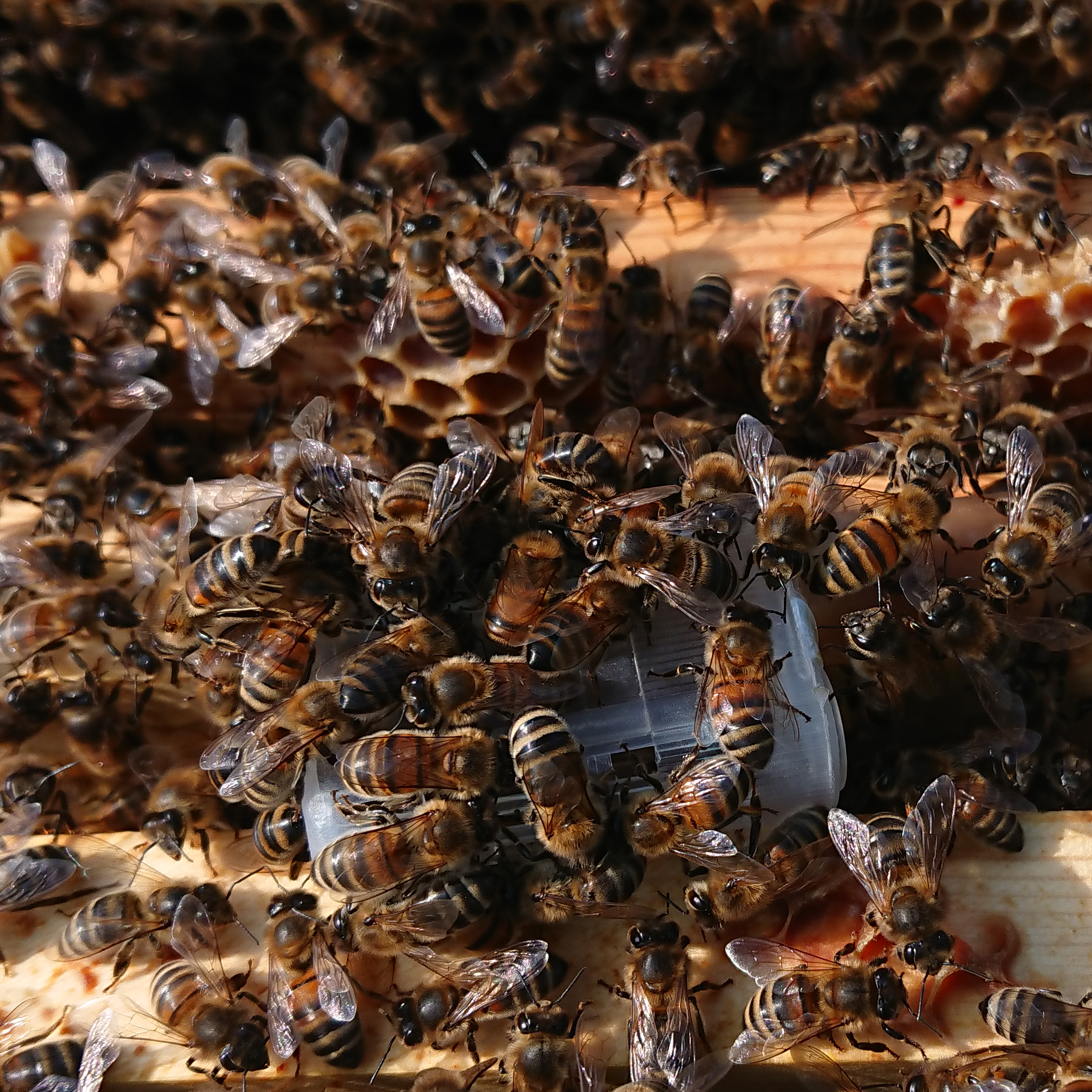
‘Cage balling’ – note the curved abdomens of the workers attempting to sting

It is a very sensitive time when introducing the queen, therefore we do like to wait for a week before we start to pull frames from the colony to look for eggs. We may do a quick check to see if the queen has sucesfully been released from the cage but thats all. Looking too early can interfere with thier relationship and this can cause the bees to reject the new queen, even if she has started laying. On your next weeks inspection look for her but more importanlty look for evidence of her existence, such as eggs, and don’t disturb the colony too much. If you can’t see eggs then you should continue to look for her.

If you are buying a queen for a split or for a re-queening we recommend that you wait until you have received the new queen prior to doing any manipulations. In very rare circumstances your queen may get lost in the post or is dead upon arrival, therefore it is always safer to wait for your queen.

If you do need to keep your queen for a day before you put her into the hive, we recommend storing the caged queen in the packaging she arrives in. Firstly, check there is still enough fondant and that the attendants are alive, and them place the cage back in the packaging so they are in the dark. Keep them in an ambient temperature away from the sun or any other heat sources. Don’t keep them somewhere where they are likely to get cold; we have had quite a number of occasions where customer have received their queens and put them in cold conditions only to return hours or a day later and find the bees not moving and immediately think they are dead. Cold bees fall into a state similar to a coma, move them somewhere warm and they wake up again 🙂

I hope you have found this blog useful.
Season Update: Spring Viability and First Queens!

Another two weeks and spring is definitely kicking off, at times it has even felt like summer. This sudden rush of warmth has done our colonies a world of good, and we were able to get through all of our nucs and hives to treat them and assess their strength for upcoming nuc production and the oilseed rape.

After doing the first proper inspection we found that the strength of our colonies greatly varied, some colonies had very little bees making an environment that was not conducive for the queen to lay and expand as optimally as we were hoping for this time of the year.

However, within the first week of the warm weather the weakest colonies have already shown some progression to be seen as a viable colony, instead of needing to unite the colony with a stronger one. So it’s looking very positive for us having got through so many nucs over the winter, things are however a little slower though with our restrictions in place meaning that a lot of the nuc production is going to be handled by Sian alone but she’s working all the warm hours that she can.

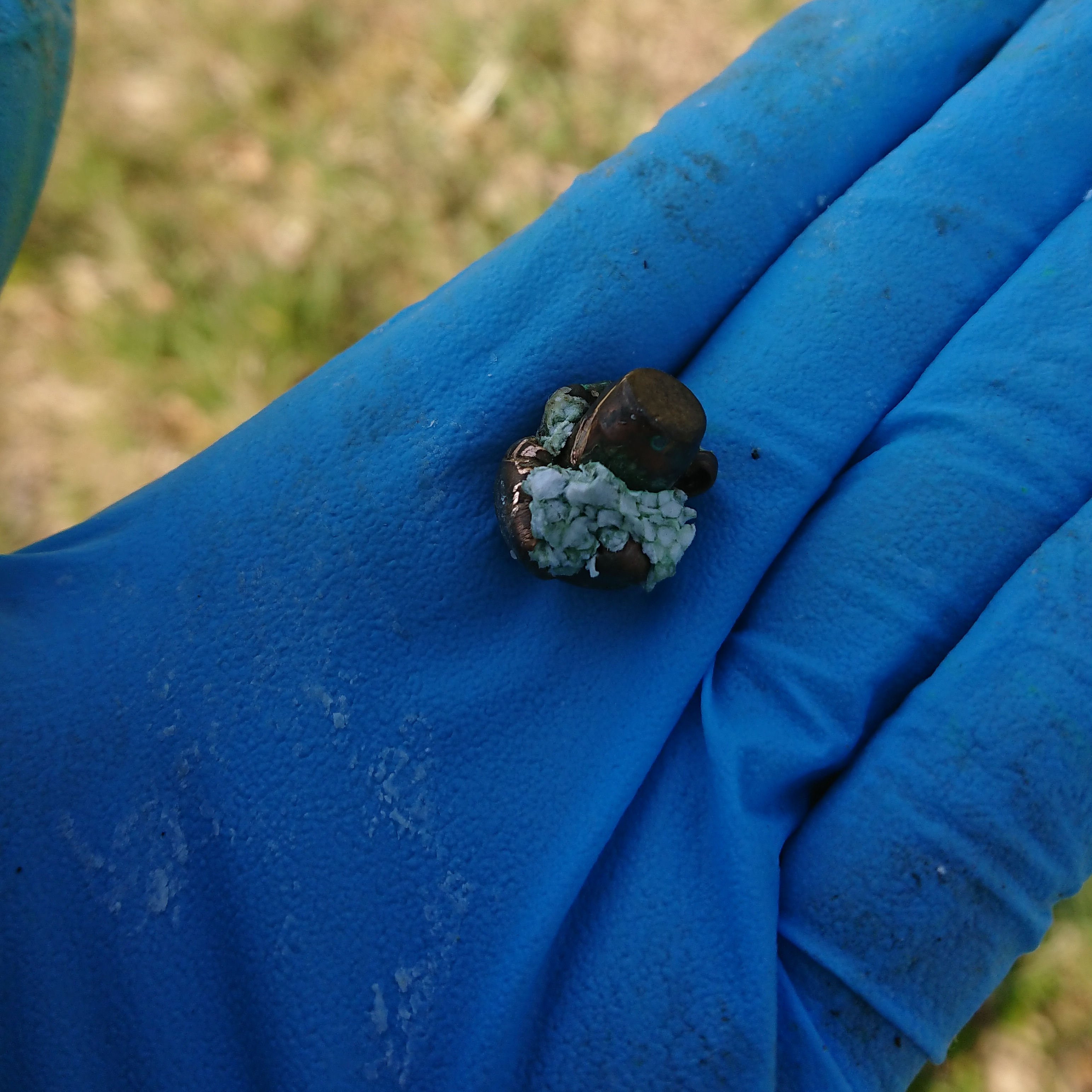
Not only is she working 24 hours a day, she is also finding all sorts of mysteries! Worryingly, she found a bullet in one of our poly nucs, lucky she wasn’t shot at and that the bees were not harmed!

The bees inside were fine 🙂

Last year we tentatively started our own queen rearing production, we only managed to get a few queens, but one of which has been incredibly prolific since the start of the season. So we’re hoping to get a good rearing schedule going this year.

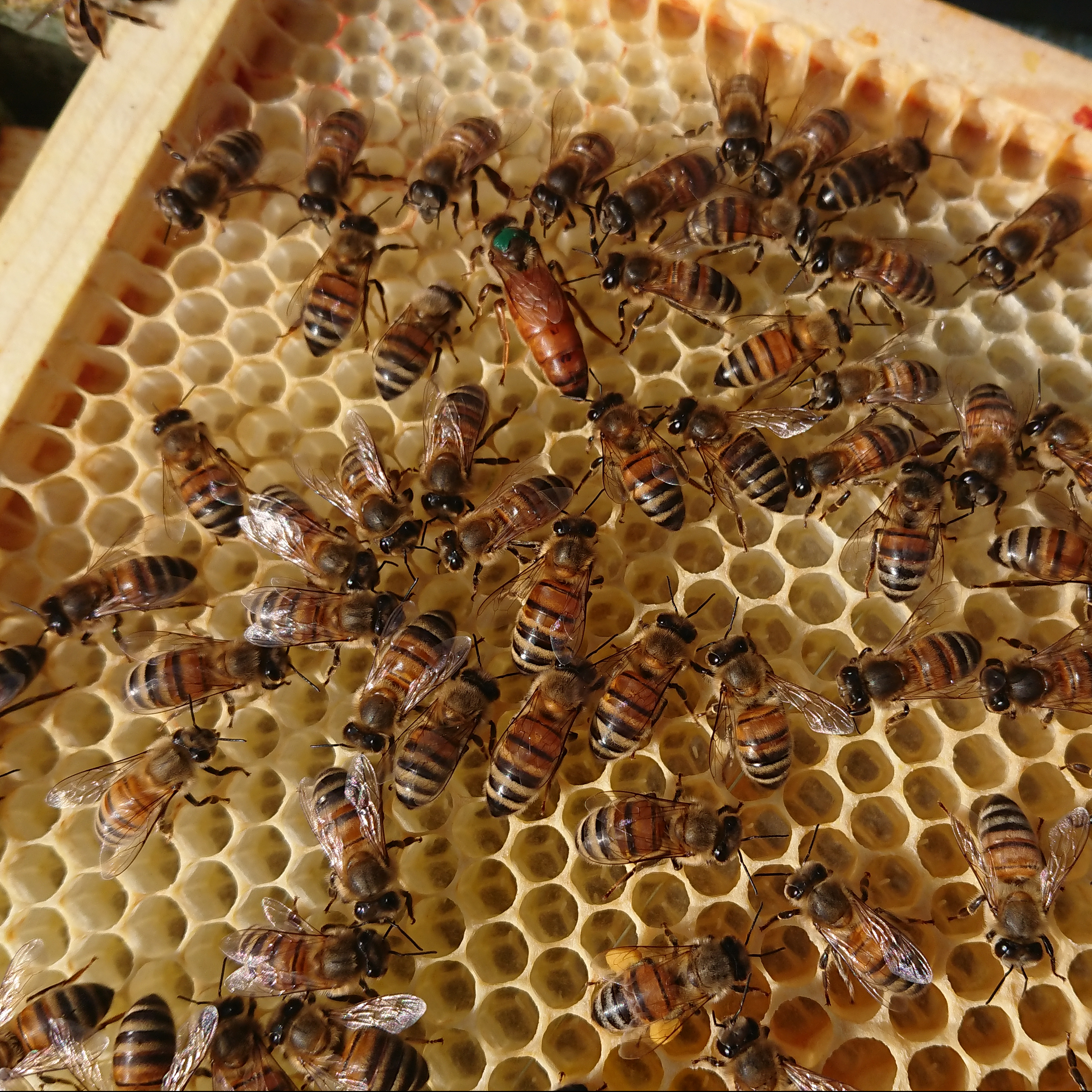
Proudly presenting our Becky’s Beezzzs Buckfast

Talking of queens, our breeders abroad have been able to send us some overwintered queens and spring queens much to our relief!

A daring escape!

Everything seems to be happening all at once, and I have been confined in the office drowning in work! Sometimes we forget over the winter just how busy it gets during the season. We’re looking forward to our customers receiving their queens, as well as nucs, we are a few weeks behind but we’re hoping the next two weeks will enable us to get out our overwintered nucs.

Stay safe,

Becky’s Beezzzs Team

Beginner’s FAQ: Why Do Bees Gather Pollen?

Pollen is an extremely important source of nutrition for honeybees and beekeepers will often talk about pollen sources throughout the season. So we’re going to talk about how our wondrous bees gather pollen and why it is hugely important to the development of the brood.

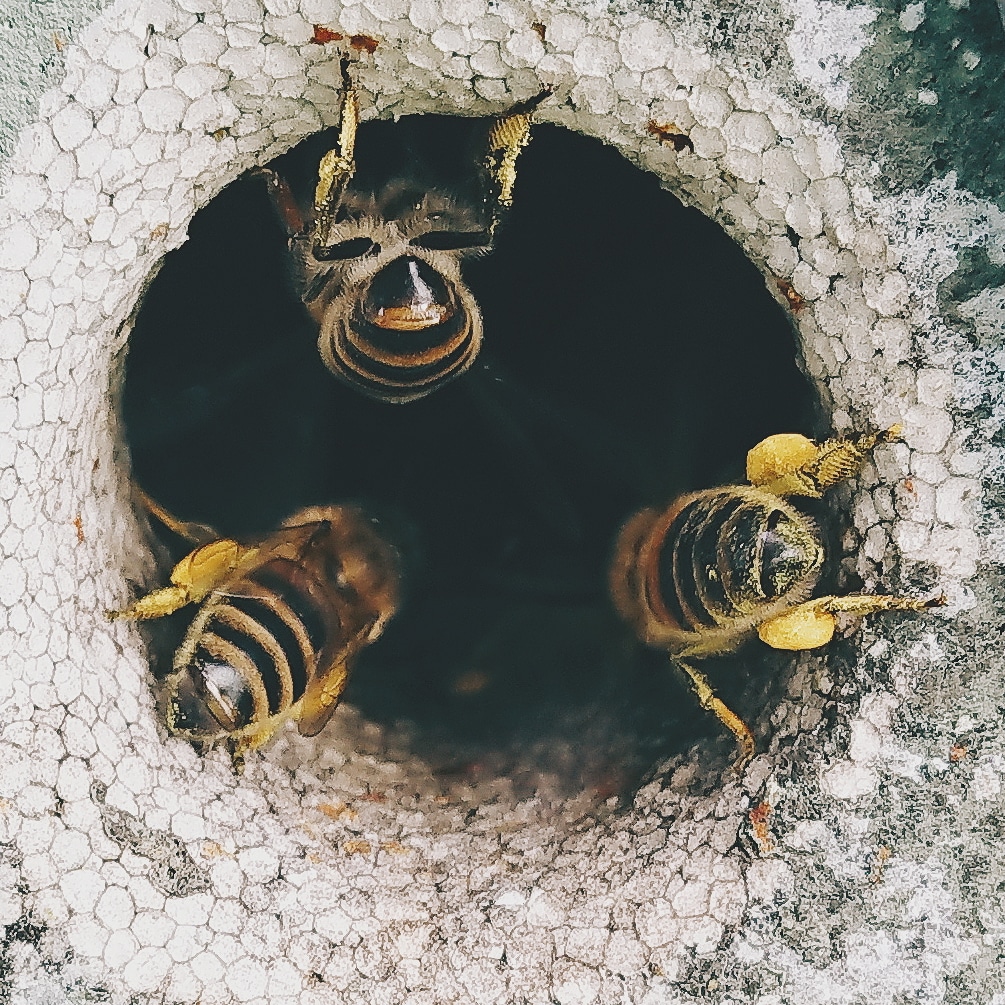
Pollen ‘baskets’ also known as corbicula

Honeybees have a specific pollen collecting apparatus called corbiculae, which is why you see bees carrying big patties of pollen on their legs. The corbicula is slightly concave and located on their hairy hind legs. After the honeybee visits a flower she is often speckled with little pollen granules, honeybees being a very hygienic insect, groom themselves and as the rub their legs, the pollen is brushed down into this section where it ends up being gathered tightly into a big perfect pellet of pollen!

Different stages of ‘packedness’

In the process of collecting nectar and pollen, they also freely pollinate the flowers they visit, a beautiful example of nature at its finest. Honeybees with their incredible work ethic and engineered body are often known to be put to work in pollination contracts.

So why do bees store the pollen? This is because pollen is an extremely important source of nutrition for bees. Nurse worker bees consume pollen in order to develop their hypopharyngeal glands, the gland that eventually produces royal jelly to feed to larvae and a future queen. Nurse bees communicate the demand for pollen, not only the quantity but the quality to the foragers, as you all know, bees work very closely to a common goal.

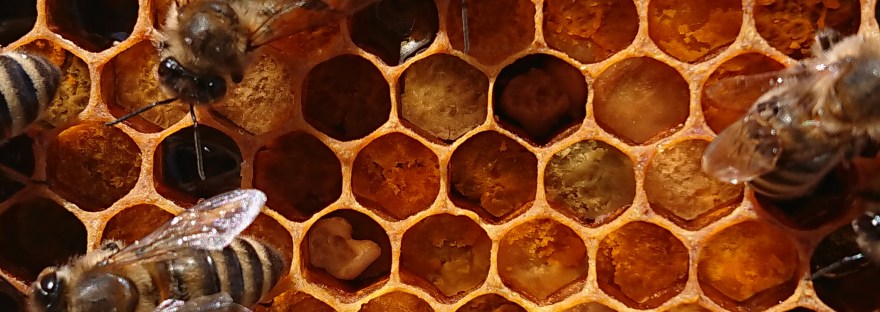
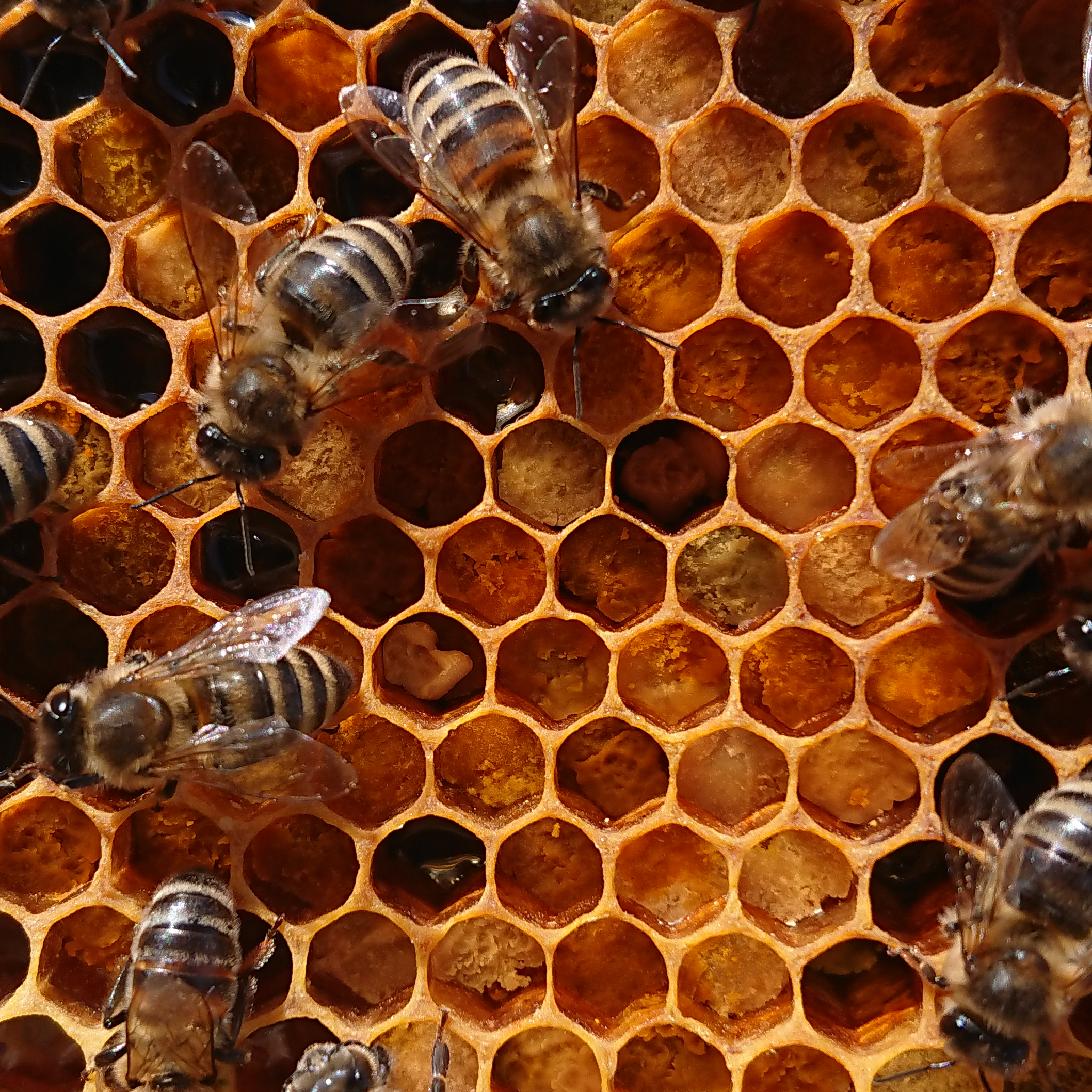
Stored pollen, you can still see some not packed in yet, bees actually use their little heads to pack the pollen down!

This is why you will see copious amounts of pollen being brought in as the brood nest expands. A rule of thumb is that if you see your bees bringing in pollen, brood is definitely being raised! Fresh pollen is sometimes consumed as you see it on their legs, usually through grooming , however stored pollen is often mixed with nectar, digestive fluids and all that goodness, and once it has time to ferment it becomes what is known as bee bread, and this is a source of food for all worker bees and larvae.

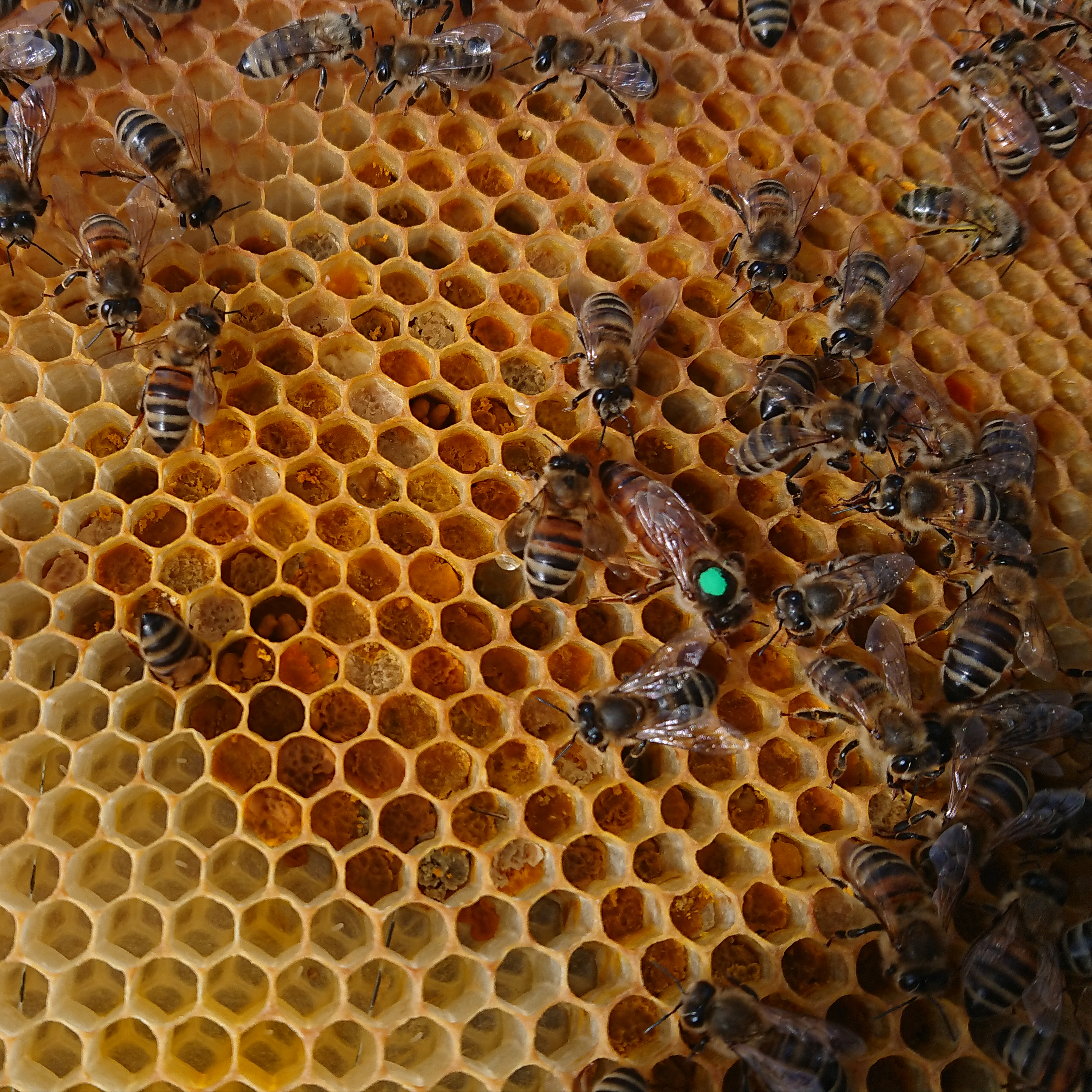
The importance of pollen to raising brood is also evident when you see the classic band of pollen surrounding the patch of brood, it gives easy access for the nurse bees to nourish themselves and to feed the larvae.

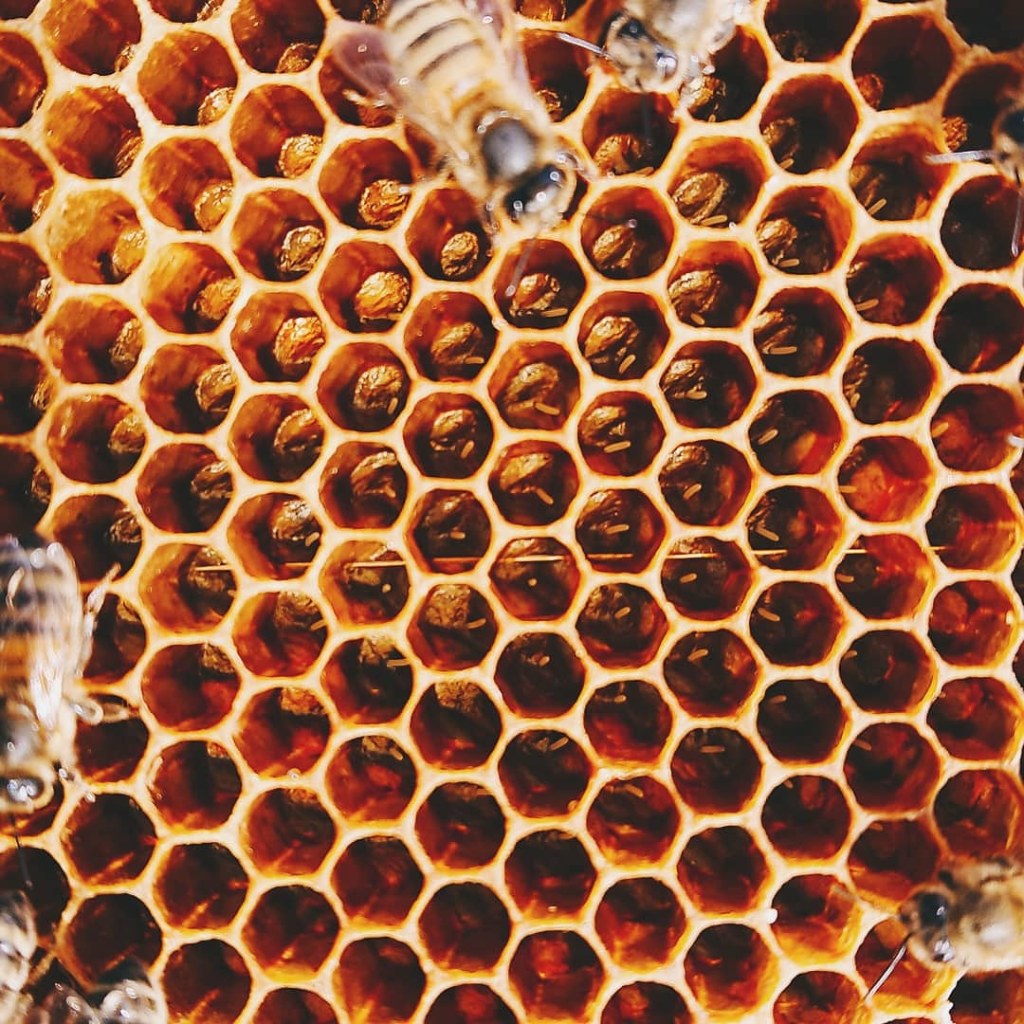
Can you spot the eggs?

Therefore when you’re checking your bees, you will know that it is essential to check if they have enough food to sustain them until their next check, some beginners make the mistake of only really checking for honey stores – however a colony not bringing in pollen is not a great sign for brood development and in consequence, the health of your colony as a whole.

So the next time you go through your colony, marvel at the amazing variety of pollen that your bees are bringing in, from purple, forest green to bright yellow pollen, our girls never fail to amaze us!

Season Update: Collecting Your Nuc During a Pandemic

Many of our customers will have received an email from us regarding the current status of nuc orders in regards to Covid-19. We fully intend to supply everyone who has ordered a nuc with us. Though we do understand that a huge amount of people are worried about coming into contact with others and potentially spreading coronavirus so we’ve put together our protocol to ensure that everyone feels comfortable when collecting and travelling with their nuc.

We have to emphasize that historically we have always recommended that our customers collect their nucs due to the welfare of the bees, in these unexpected times we find that this is even more important than ever. We do not want to put any additional pressure on our postal system who are already overrun with deliveries and working whilst understaffed. In addition to this, we want to minimize the amount of possible people handling the nucs to reduce any risk to you. We completely understand that collection is not an option to everyone, however we must keep in mind any changes to Royal Mail’s service due to their increased demand and each order will be considered with your circumstances in mind.

Our Collection Process

All of our nucs will now only be available in our correx box aside from the 14 x 12 nucs. When you come to collect your nuc from our office, your nuc will be in a shaded area, the exact location will be explained to you before your arrival. If you have any trouble at all, there will be someone available in the office who you can call upon, proper social distancing measures will be enforced if for any reason we do have to meet face to face.

Your nuc will have your initial, surname and order number written on the top of the box, if there is an ‘X’ in the top right corner, this means that the team did not see the queen during the boxing up process and you should follow the guidelines explained in the care notes. On the bottom back of the box, an ‘X’ will indicate the entrance.

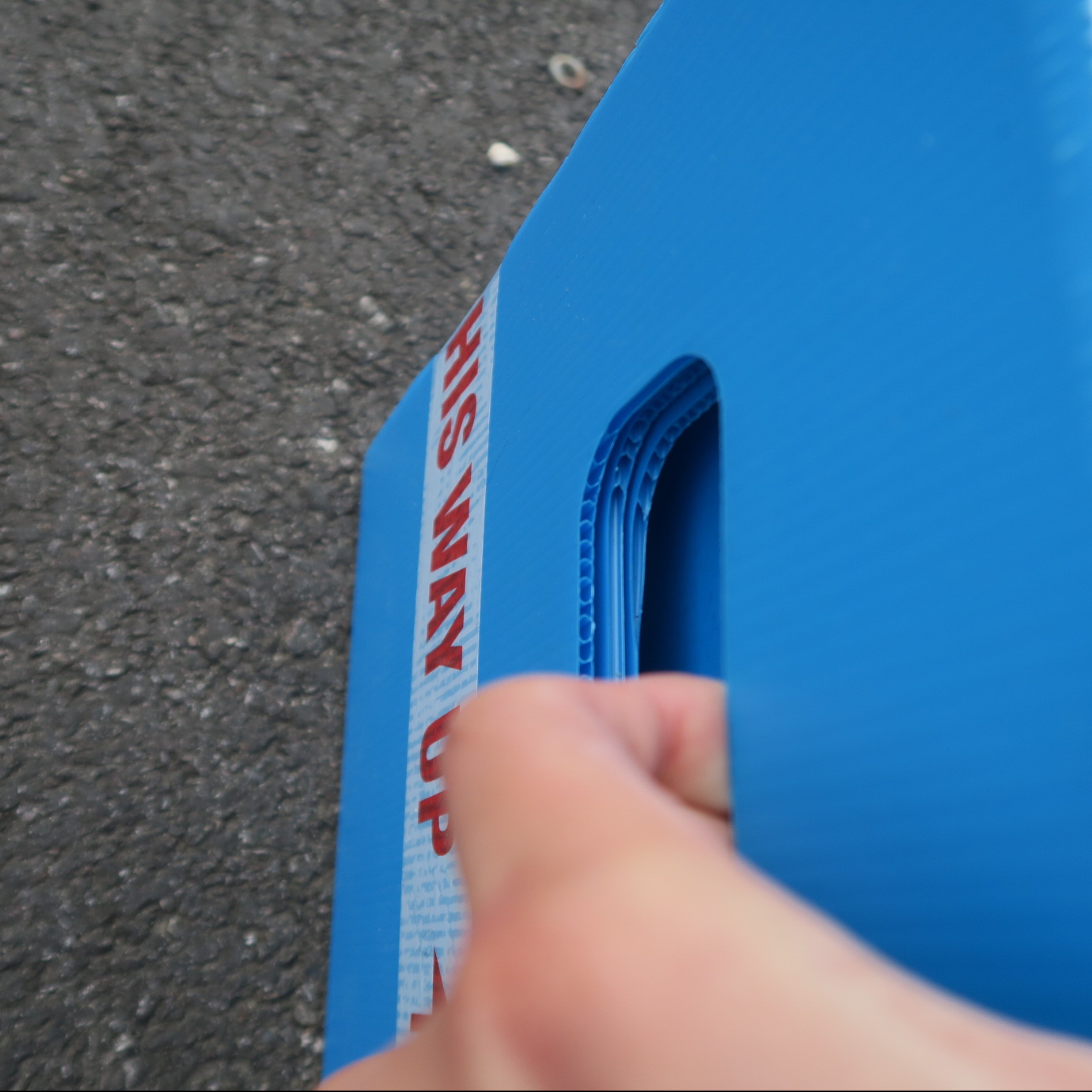
When physically picking up your nuc, please ensure you handle the box carefully and do not push in the inside of the handles with force as this may give bees the opportunity to climb over the frames and escape via the handles even though there are two layers of correx preventing this possibility. Instead, please rest your fingers underneath, or alternatively pick them up from the bottom of the nuc box. I will just mention that you really would have to be quite rough/forceful for this to happen but we have mentioned it because it is a possibility.

Rest the tips of your fingers under the handle

You can see the inside of the correx box here, and how the bees would be able to escape.

Don’t do this!

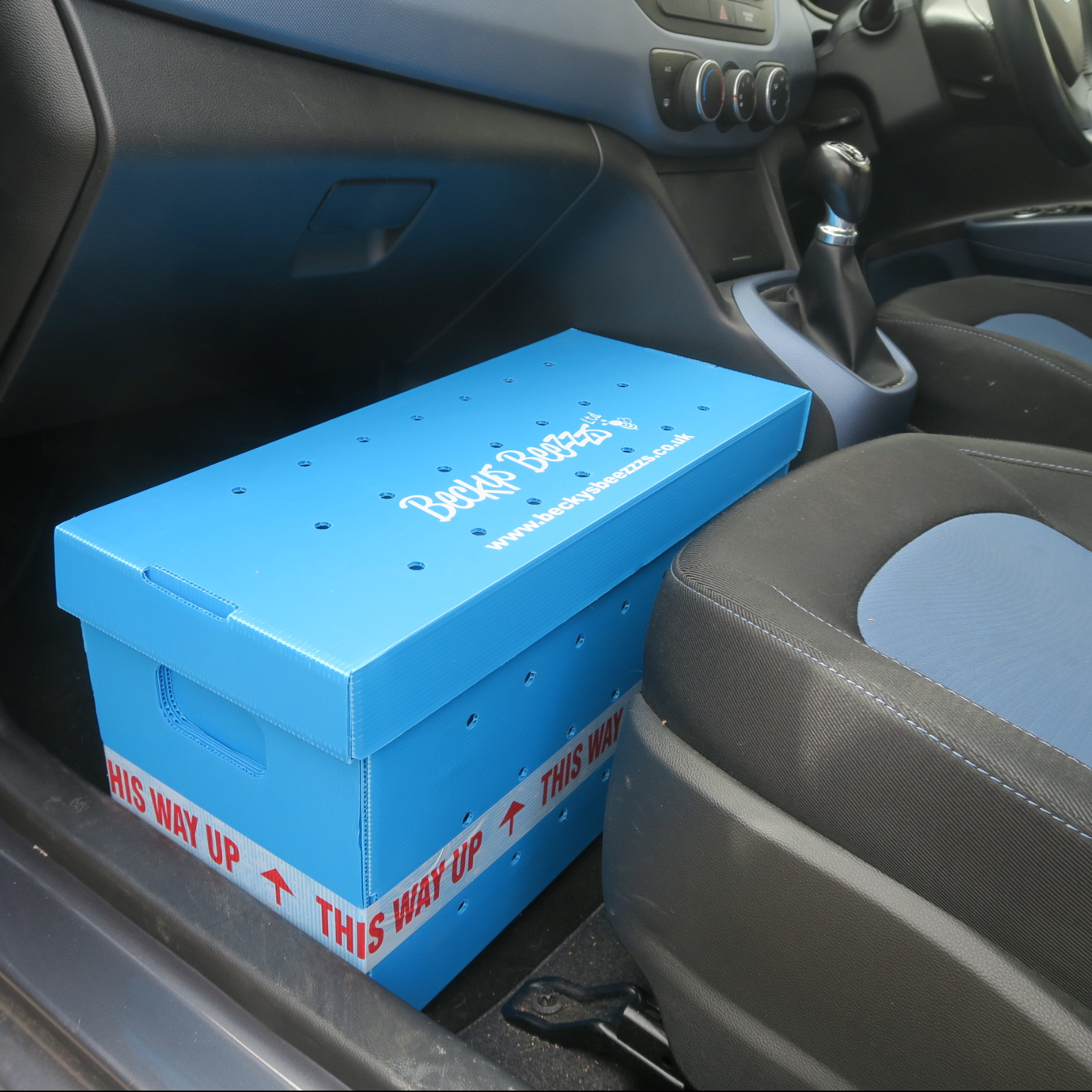
The best place to put your nuc is in the footwell of your car. As you can see the top, front and back of the correx box has meshed holes for ventilation, please ensure that these are left uncovered as much as possible as it would risk the bees overheating.

Make sure it is fit snugly and has very little movement but not blocking the ventilation

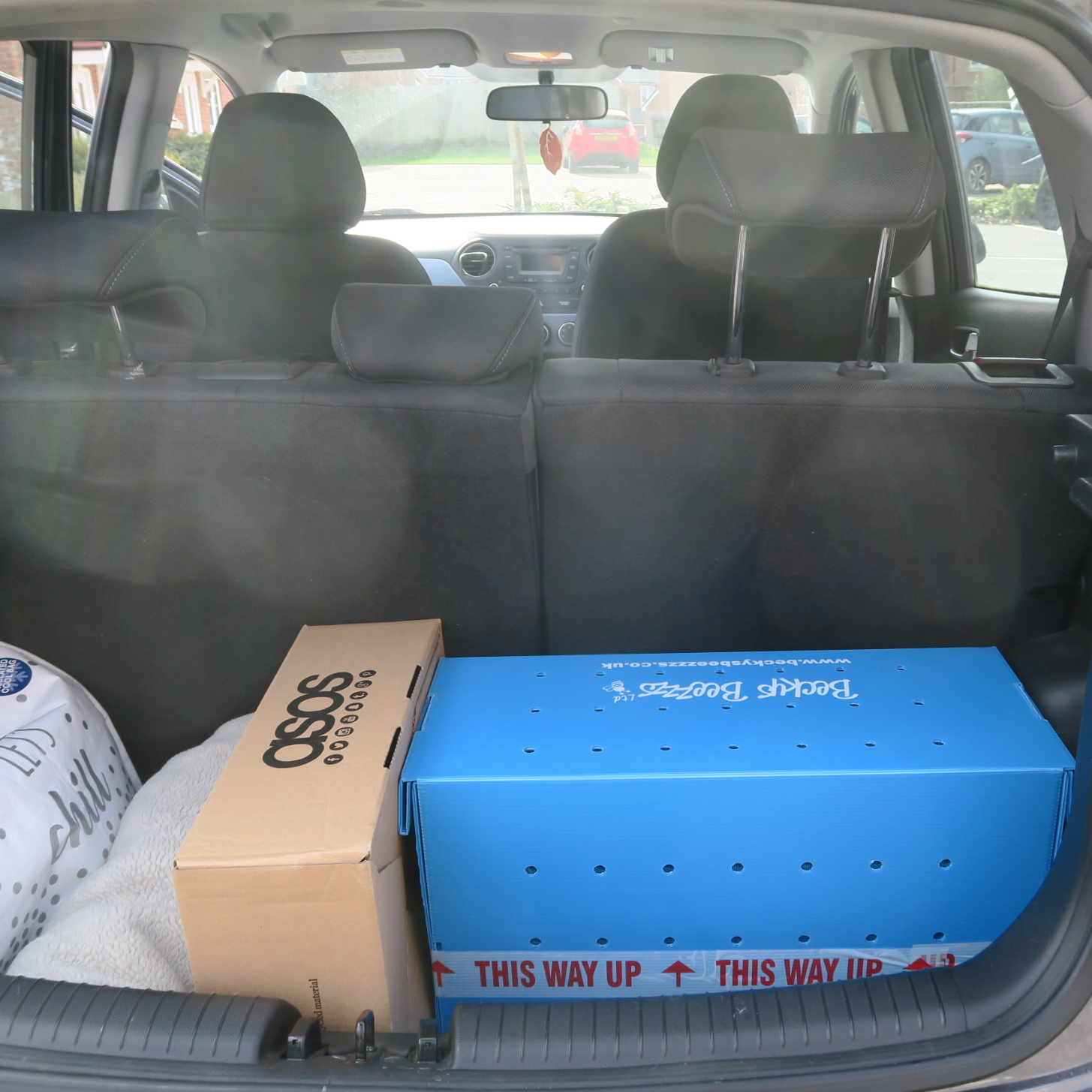
Otherwise you can place the nuc in the boot of your car, but please take the parcel shelf/boot cover off to help with ventilation. You may also need a few items to hold the nuc in place, ideally the item is not something that will hold a lot of warmth, for example, a box.

You may need a few more items as Sian’s car is tiny!

Where possible place the nuc with the frames parallel to you (this isn’t possible in smaller cars like Sian’s), this will reduce the risk of the frames rocking when braking sharply, the frames are quite snugly fit in the correx box, so it’s really just an extra precaution.

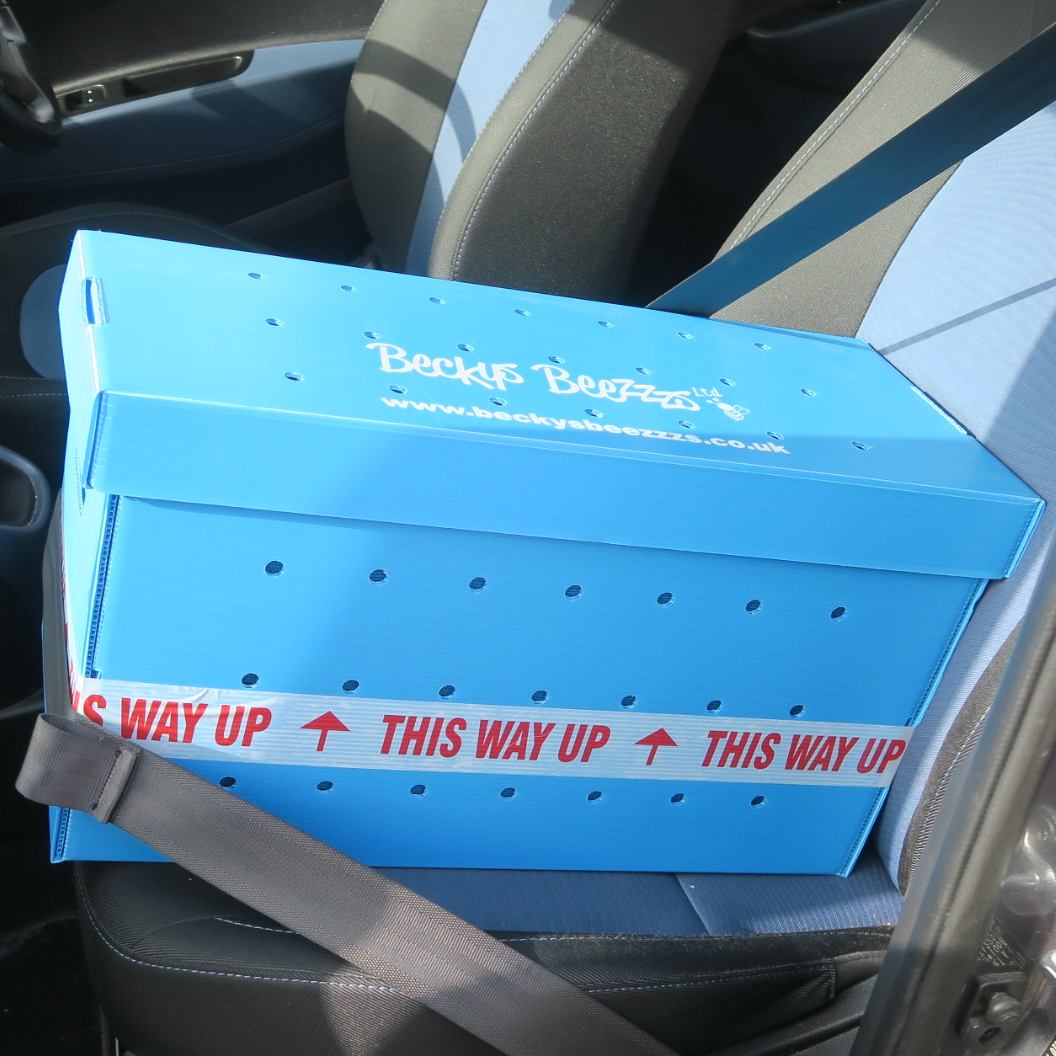
You may choose to travel this way, but make sure the seatbelt is pulled tightly, with the seat pushed forward as much as possible to pinch the nuc in place. There is more of a risk of movement here, so you must drive with more caution.

Though I’m sure it goes without saying to drive conscientiously knowing that you have a box of bees in the car with you! Unfortunately a couple of years ago our Rob and Sian were in a little car accident and when the first response arrived she happened to be severely allergic to honeybees.

Keep the bees cool, turn on your air con if you car has the facility, or drive with your windows down. Bees are hardy when it comes to the cold and can survive pretty low temperatures, the biggest risk is overheating during transport which is a very real possibility. Come prepared with a jumper if you’re sensitive to the cold.

Signs your Bees may be Overheating

We recommend that whilst you drive back, every now and then turn your radio/music down, if you hear your bees fanning their wings furiously this may be a sign that they are very hot. Pull over where you can safely, put your hand on all sides of the box to feel any indication of spots overheating, the temperature will be unmistakable.

You may need to change the position of the nuc in the car to ensure that they are getting proper ventilation. Check which side the sun is shining, make sure your bees are on the shady side of the car.

We Are Here For You

Although we are trying our best to avoid any physical encounters with our customers please know that if you are having trouble with the collection or transporting of your nuc, a member of the team will be able to guide you over the phone. Most of our customers collect their own bees and travel with them encountering no problems so we are confident that this year will be no different. One of the reasons we have changed all orders to the correx box is because of the extra ventillation this box gives. It is the same box we use when we send the bees out with the couriers.

Season Update: We’re Open For You!

Hello all, another quick season update to let all of our valued customers know that we are still trading as usual and we do not foresee any government advice affecting us though this is all subject to change and much like everyone else we are taking each day as it comes.

Changes to the Way We Work

As we have a duty of care to our bees, we will continue to manage them as usual with slight changes. Many of our customers know that we are a very small team of four which has kind of worked in our benefit as we are able to enforce strict measures in order to keep every member of the team safe and completely minimize the risk of spreading coronavirus between households. Our protocol, which we set in place immediately, is working in separate areas, with me based in the office, Gabriel at the yard, then Sian and Rob are shouldering most of the bee work.

Where it is necessary for beekeeping to be done together, we enforce at least the 2m social distancing advice, though more often than not we don’t have to be anywhere near each other at an apiary. We also travel with our own vehicles, or one member has to sit on the back of the truck.

Ordinarily, Sian will do a few hours of work in the office in the morning to help deal with the inevitable increased frequency of orders as the days get warmer. However, due to our measures, this is not possible so my workload has increased tenfold! Therefore, it may take a while longer for me to get back to you regarding questions about orders or advice about your bees, please keep this in mind before following up with another email or calling the office as there is just me handling the office work, just over the weekend I had 77 emails to reply to.

Collections with Social Distancing in Mind

We are working with a closed door collection service for those who wish to carry on collecting from us. Your invoice will be with your order so that you can identify the order as yours. As usual we all notify when the order is ready so you can tell us when to expect you. You will not have to interact with me or any one else on the collection.

Deliveries As it Stands (General Stock)

For our general stock orders (frames, wax – not live bees) we mainly use the couriers FedEx and DHL. For smaller and lighter packages, we send via Royal Mail. We’re acutely aware of the pressure all delivery services are under. Right now the courier services remain at the standards we are used to, and we haven’t heard from their end about any possible restrictions in the near future. The Royal Mail has been hit greatly, and currently a 1st class letter can sometimes take 4 days.

This is an ever-changing situation and we have to tackle anything head on as it arises. But we cannot predict what may happen. There is a caveat on many courier sites that services may be affected due to the demand and we must always keep that in the back of our minds. So please be patient with our couriers, they are all doing an amazing job.

Supply Chains

As a provider of beekeeping equipment many are worried about our ability to continue to supply particular items. Although supply will not be an issue, there may be a delay receiving high demand items, such as gloves as there is such a huge amount of orders backed up with the wholesale suppliers.

All manufacturers of equipment will be behind on production and therefore fulfilling orders because of the nature of their workers being in close proximity. We ask for patience and understanding if you are waiting for a particular item.

Queens, Packages & Live Bee Imports

We are crossing everything that live bee imports will not be affected. Imports themselves are not affected, however we’ve not had much guidance or advice from the government in relation to movement across certain borders in Europe. This is the same case with our breeders abroad. This makes things very vague, and we can understand how this is very frustrating for our customers who are relying on these packages and queens. We can only ask you to be patient. Queen bee imports are relied on for all bee farmers so whilst imports are allowed it is courier services we use that may be the problem. So, whislt we are hope it will be business as usual we’re stuck with a slight feeling of uncertainty. Again, we will keep you updated when things become clearer.

Website Issues

A few months ago we changed our website host and have encountered quite a few issues along the way, in stock items showing as out of stock, delivery instructions not being saved on packing notes being some of the issues. So if you have not been on the website in a while, please try emptying your ‘cache’ before contacting us about a problem with our website as it may be fixed this way. Otherwise, we do welcome emails about any recurring problems you may have, and it would be great if you could take screenshots to demonstrate the problem so we can forward that on to our developer. The shop only allows you to order items that are in stock so there is no need to call us in advance to ask if we do have something in stock.

Thank You

We would like to send a massive thank you for your continued support and understanding in what is a tough time for everyone around the world. We want you to know that we are doing everything we can to continue to look after our wondrous bees and supply our customers with what they need to do the same. I would also like to thank all my lovely customers who have sent well wishes to me and my family and my fantasic team here.

All of us want you to feel safe, and we want you to know that we are going beyond all necessary precautions to minimize handling of anything that will end up in your home. Thank you for your patience and again, please, first and foremost keep yourself safe.