Since we last posted the UK had been decimated by storm Ciara and Dennis leaving a path of devastation in their wake. Unfortunately around the UK many people have been severely affected by flash flooding and building destruction so we’re counting our blessings that our homes haven’t felt even a fraction of the devastation that many others are experiencing right now. Storm Ellen is also scheduled to plummet temperatures and bring snow to various parts of the UK, but fortunately for us not expected in Hampshire where we are based.
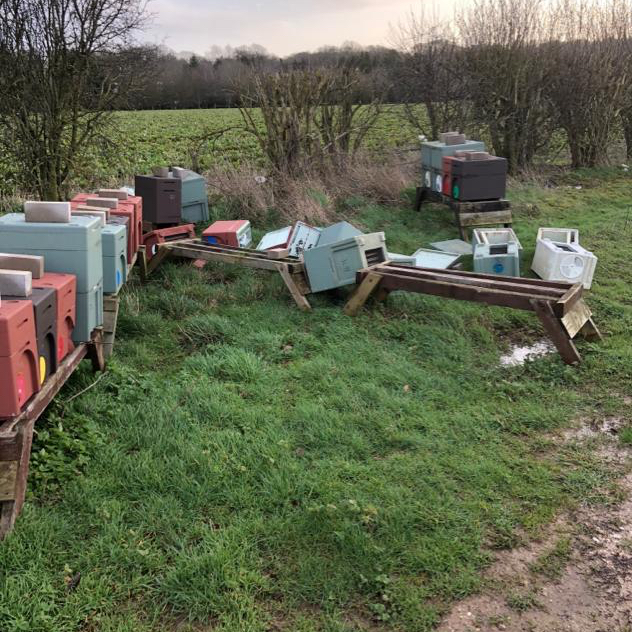
A little bit of the carnage we came across after Storm Ciara
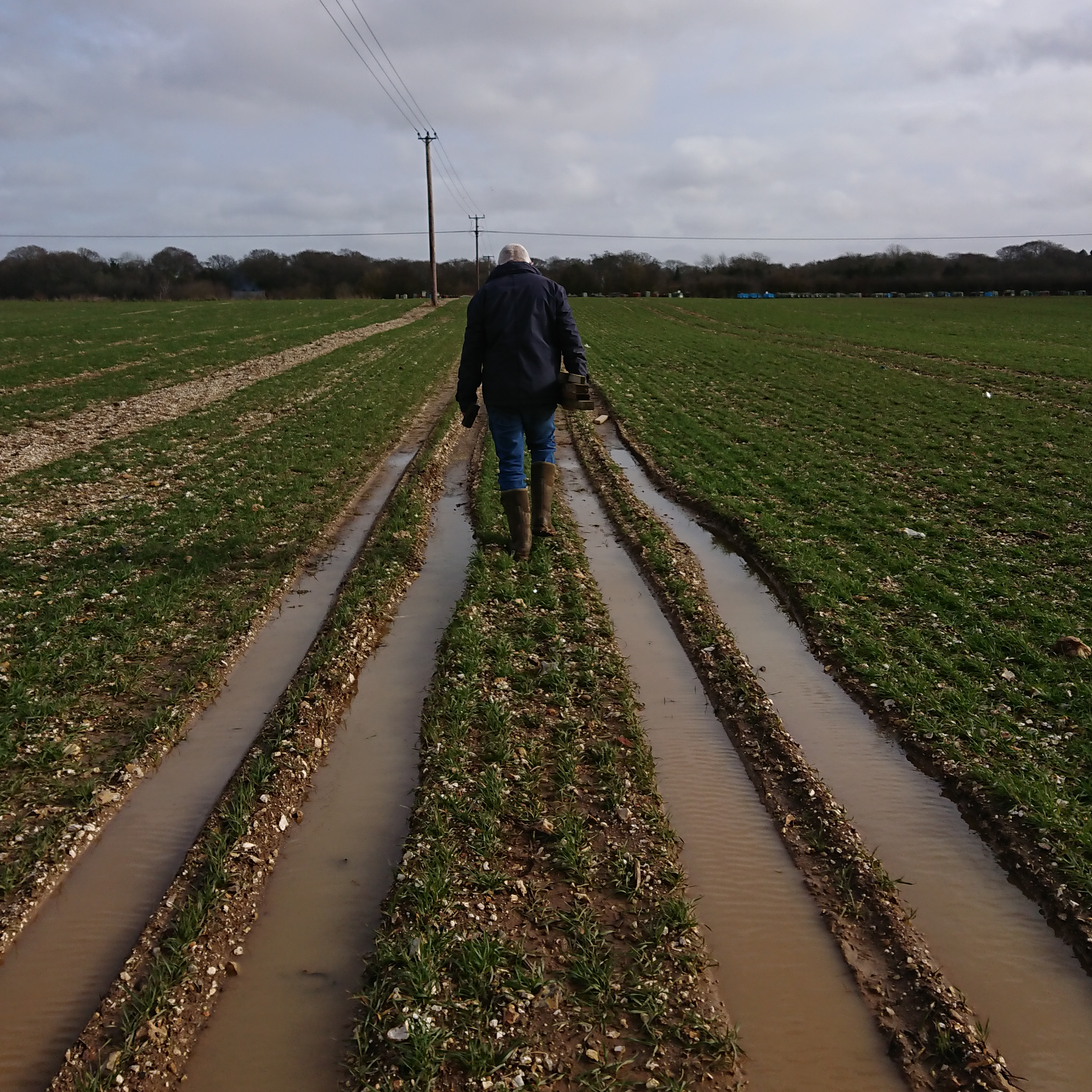
The high winds from storm Ciara blew over a number of our nucs, stands, nuc lids as well as one of our hives. Luckily, as we were picking up the pieces it did seem that all of our colonies were still alive, honeybees are hardy creatures but it certainly would not have done them any good so we’ve noted down their numbers and are keeping a close eye on them. We checked our apiaries each day after that, and one was knocked over again despite all the extra weights we put on them, the team then went full mother hen mode and tethered the most exposed colonies down.
On our way to tether the nucs
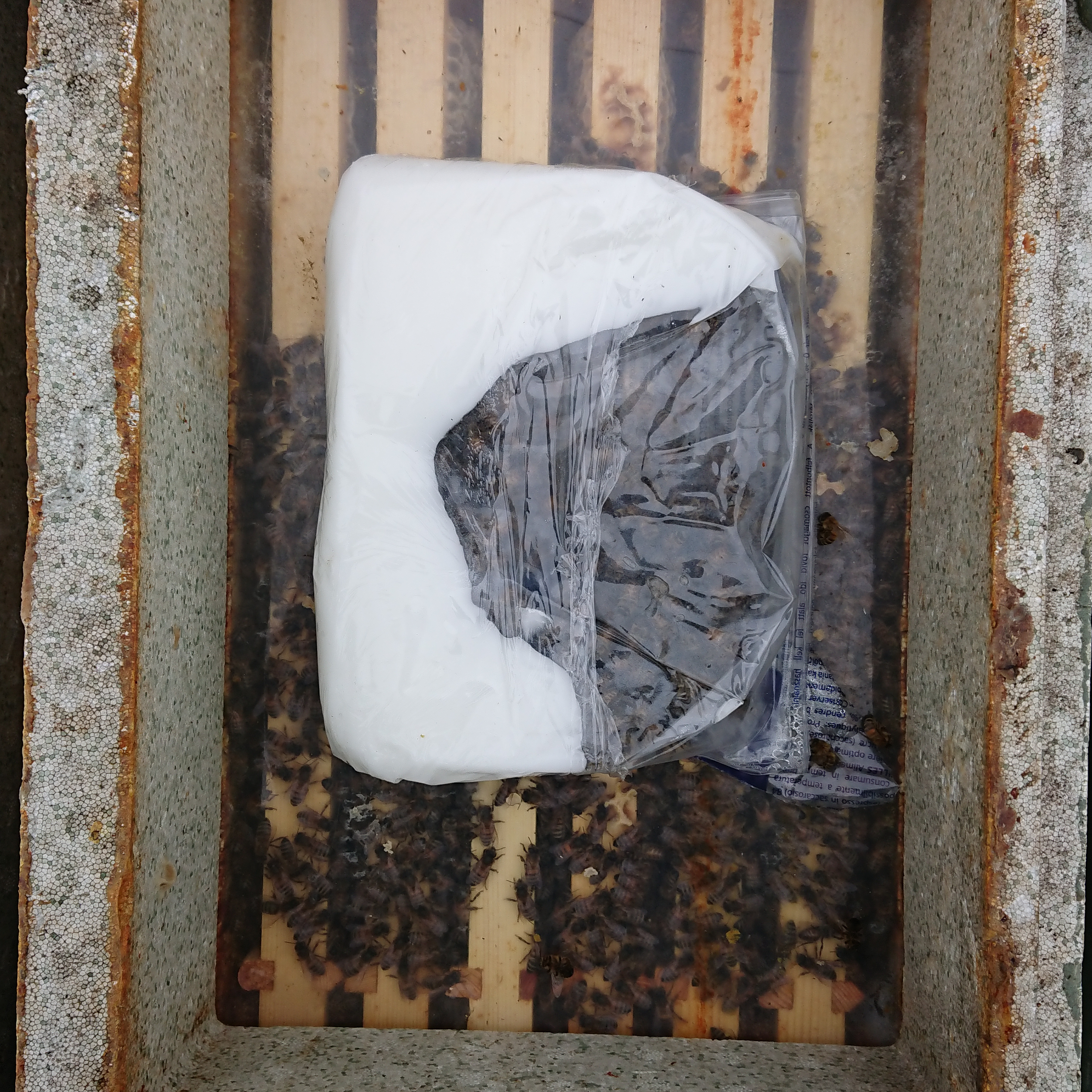
Seeing how mild the weather has been (despite the rain and wind) we started to put a bit of Candipolline Gold on our colonies knowing that the temperature is expected to plummet. We could see from fellow bee farmers and our colonies that the bees were bringing a little bit of pollen in themselves, catkins and gorse are great natural sources of pollen at this time of the year. This is an indication that their queen was beginning to lay some eggs, the problem is if they don’t have a continuous source of pollen then the workers may pull out the larvae as they are not adequately fed. With temperatures falling, the workers will not go out to forage and therefore colony buildup will be set back.
It may seem a bit premature in the year to be thinking about spring buildup but we have to go by our intuition and the current weather patterns, and if the weather is consistently mild then we have to adequately feed the adults bees and potential brood.
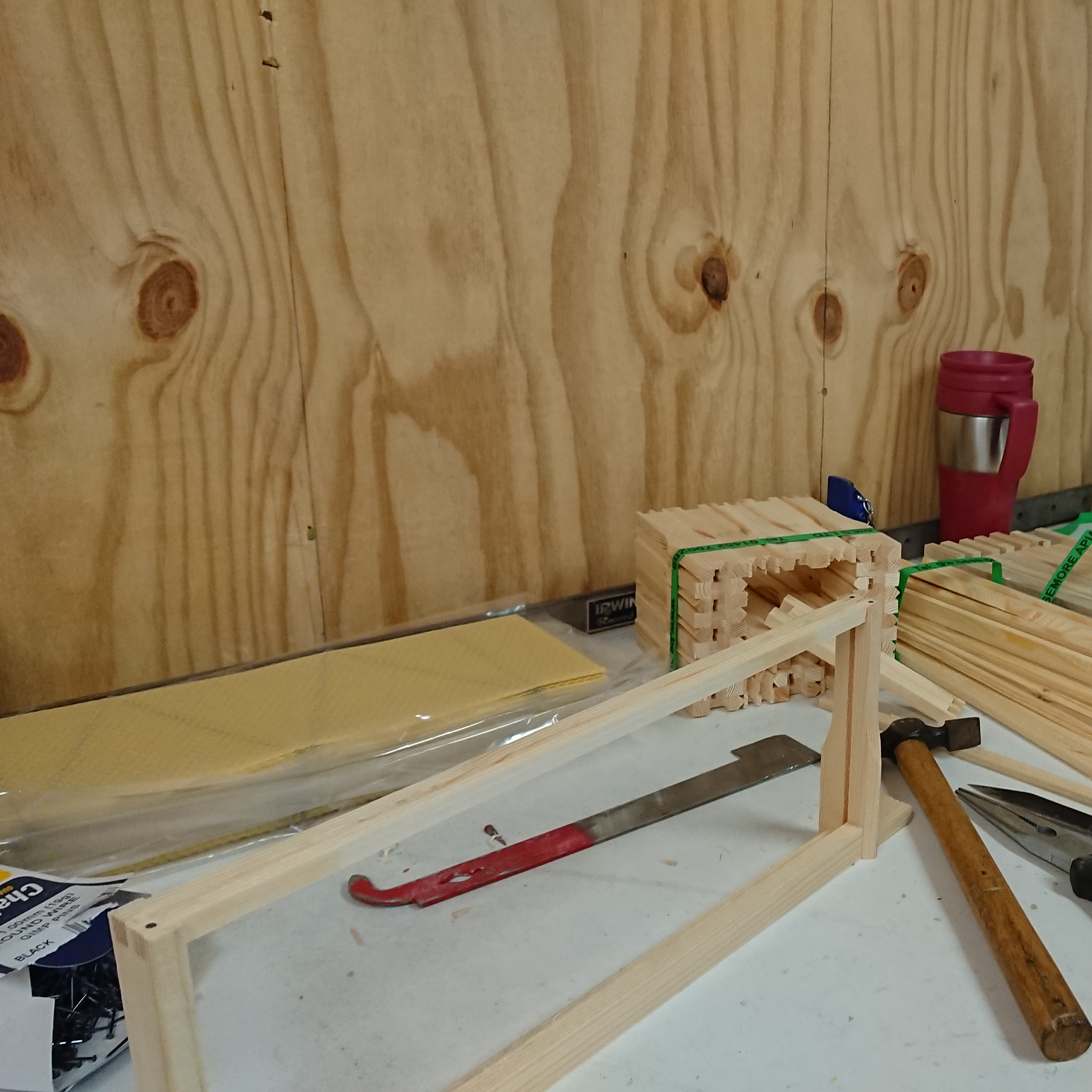
Currently all of our equipment is all cleaned and ready to be refilled with frames, so Sian and I walked to our storage and had a little count of how many frames still need to be made. So, if you’re ready to hang your head in despair….
1,512 National Brood Frames, 582 14 x 12 Frames, 6 Commercial Brood Frames, 180 Langstroth Brood Frames, 480 National Super Frames for rewaxing and 432 National Super Frames.
A whopping 3,192 frames!!
That in mind, we better get back to work as we’d ideally like everything to be filled by March, please think of us stuck in the yard!
Are you wondering if it is essential to do a beekeeping course before starting beekeeping? Our short answer is – YES. In this post we’re going to explore why it is essential for anyone who wants to go into beekeeping the do a course and then also what to look for in a beekeeping course.
Why Should I Do A Beekeeping Course?
You may think that you are fully invested in taking up beekeeping as a hobby, however until you properly get your hands into a hive you will not know what it is like to have bees. Some of our course attendees even believe that they already understand what it is like to have bees flying around you, crawling on your hands and stinging you, but once they get to the practical session of our course, they just freeze up (or they run away).
Reading all the materials and books that you can on beekeeping can be extremely useful, but you really have to get hands on experience to understand your capabilities, sometimes frames, supers or brood boxes are heavier than you think.
All hail the mentor (don’t mimic that manual handling)!
What to Look For in A Beekeeping Course
We’ve personally been running beginner beekeeping courses and tasters for quite a few years. They’ve developed, regressed and changed dramatically because we are always trying to give our customers what they want. We take feedback very seriously and it’s helped us time and time again to try and create a good value and unforgettable experience.
Practical Handling& Group Size
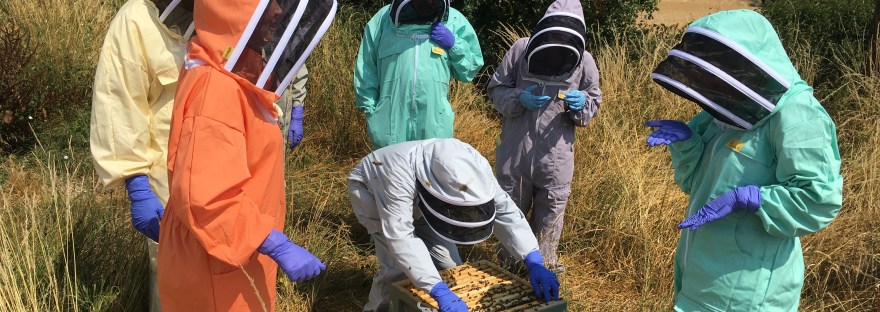
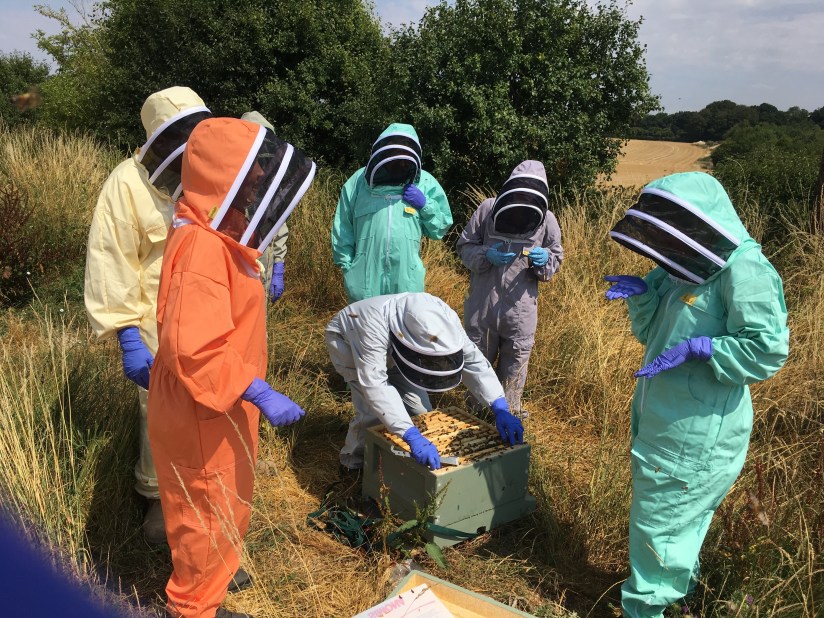
I couldn’t stress enough the importance of the beekeeping course to allow you to handle the bees yourself. Obviously not without the teacher initially, but we all need to build up the confidence to adequately handle bees eventually independent of others. A good course should not have a huge group (depending on how many teachers there are). For example, on our course we have two teachers with a maximum of 5 students in each group for the practical handling session. This allows for each person to have a good amount of time looking through the bees themselves with a chance to discuss with the teacher.
Rob being surrounded by the students because Becky is taking the photo!
Handling Different Frame Sizes
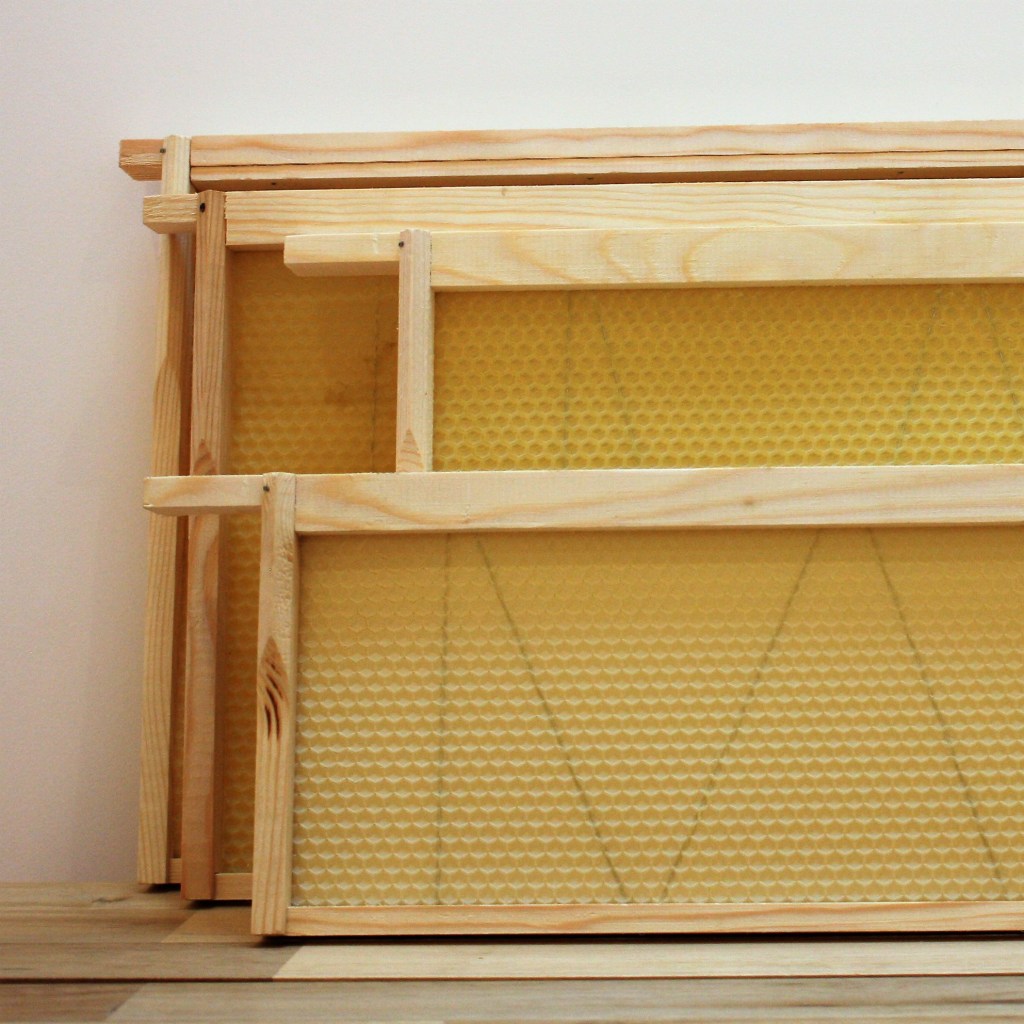
If a course specifically allows you try out different equipment sizes then that will give you an excellent idea of what will suit you as a beekeeper. You may find that you need the smallest/lightest kit, i.e. the national, obviously this comes with downsides such as less space to lay for the queen and therefore you have to be on your toes to prevent swarming. The commercial and langstroth have shorter lugs which may be more difficult for some people to handle, so it is advantageous to be able to handle them when they have been fully pulled and filled to give you a realistic idea of using them practically in the future.
Different sizes of frames
Handling Different Breeds
It is quite rare to find a course that explicitly states that it attempts to show you different strains of bees. There are a lot of different strains on the market and the information given to you can be a little overwhelming to say the least. Therefore, being able to practically handle different strains will allow you to see subtle differences in temperament and prolificness.
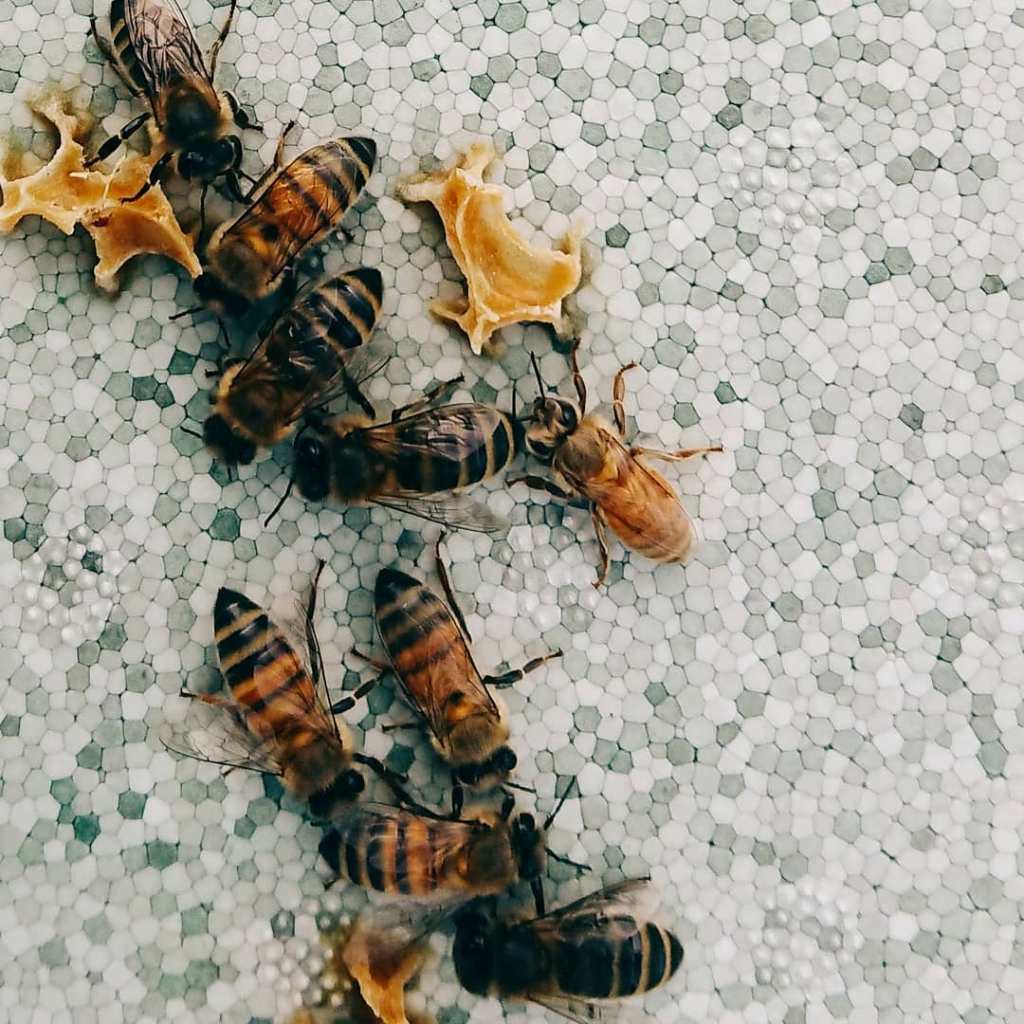
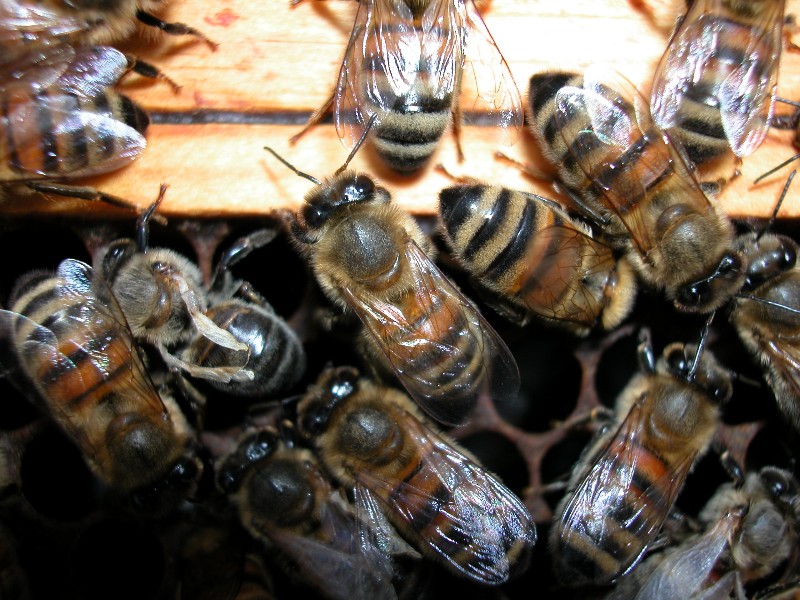
Colour variation of the worker bees in a single nuc
We do our best to keep our colonies showing a different variation of the strains, however colour is not always the best indication of the strain! For example the Buckfast has been crossed with so many different strains that the colour variation is not always predictable. Needless to say that most of the queens that we use are open mated, meaning the queen is free to mate with any drone, this means that there can be a mix of genetic material within each queen’s lifespan.
Little Extras
Some beekeeping courses add a little something special for your day. for example River Cottage and The London Honey Company provide lunch. For us, we always try to make a honey cake to eat during our tea break, a honey tasting and we also give everyone a 12oz jar of honey to take back home with them.
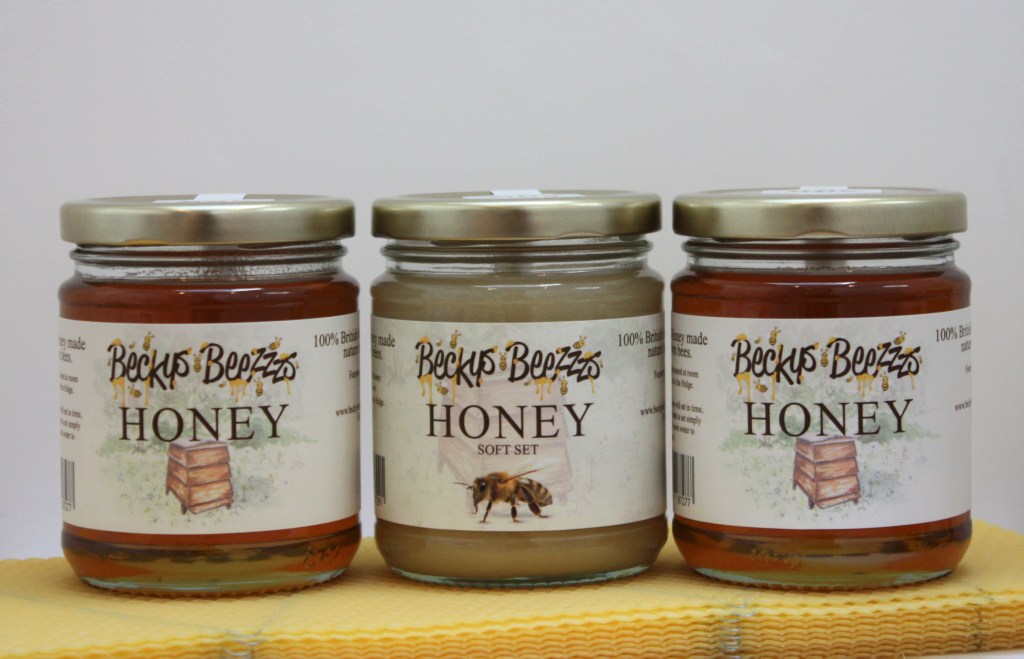
Our range of honey
Alternatives to a Beekeeping Course
The only reason to not do a standard one or two day beekeeping course is going through some different avenues. However the principle is the same, that you have some practical experience before getting your own bees.
Go to the Local Association
A lot of beekeeping associations run introductory beekeeping courses throughout the winter, this leads up to a handling session in spring. This can often be very good value of money, bear in mind you will also have to pay the fee to join the association to begin with. This varies greatly between the associations so it is best to contact them directly. Either way, it is a great way to grow as a beekeeper as you have many experienced beekeepers guiding and supporting you on your journey.
Shadowing a Mentor
Does your neighbour have bees? Maybe they’ve had bees for years! Having a mentor is a great way to learn with very little time pressure as well as building a lifelong friendship. One on one training is an incredible opportunity to learn but one thing we may say is that don’t take everything they say as ‘gospel truth’ there are many different approaches to beekeeping and it is always great to incorporate new methods as you learn.
Volunteer at a Beefarm
If you live near a bee farming business maybe they would be willing to take a volunteer. That way you can learn on the job as well as having the added benefit of seeing many different colonies in a short space of time. Actually our very own Sian learnt this way from a bee farmer in London!
Here’s to all the new beekeepers of 2020 ready to bloom!
In Summary
It’s clear to see that we are extremely pro-course! Not just because we are selling a beekeeping course ourselves but because we have had a lot of experience giving advice to new, hobbyist beekeepers. We just despair when we get a phone call for advice and they are oblivious to even the basics of beekeeping (like not knowing what eggs look like!) and yet here they are with a struggling colony of bees and it is almost impossible to give accurate advice when the caller cannot even explain what appears to be wrong with the colony.
Beekeeping is a huge responsibility, not just to the health and wellbeing of your bees, but to your fellow neighbours and other beekeepers in your proximity. Beekeeping has a lot to it, and there’s no way that you can learn all of that from a book, likewise you can’t learn everything just by handling bees! It is most certainly a combination of both, but if you’ve had zero experience looking after bees (or getting stung) then it is essential to do a course or gaining some practical experience before investing in this new hobby. Remember, bees are not just for a season, they are hopefully for life!
It’s official, the team and I are overworking ourselves to the point that we’re almost broken! Only physically though, we’re all mentally hanging in there (‘Speak for yourself!’ – Sian). During this time of the year Sian and I are usually holed up in the office ensuring all our nuc and queen orders are all on the spreadsheet, doing our sales analysis and Sian is undergoing the long process of last season’s analysis of our nuc and hives productivity. However, with Gabriel still in New Zealand there is a lot of prep work left to do for the upcoming season, you know the drill, making frames, boxes, rewaxing frames and cleaning.
Another huge job that we’ve undertaken is redoing our honey room floor which has been causing us endless headaches last year. We removed all of our equipment from the honey room and now the yard is looking pretty cramped, hopefully it’ll be all spick and span before Gabriel’s return. It’s taken us about a whole day for Sian and I to manually scrape off all the paint before I had to acid wash the floor, then wash the floor multiple times. Now our backs are hurting and we’re feeling old. Rob helped us for about 30 minutes before calling it quits and he continues to work like he’s a young man!
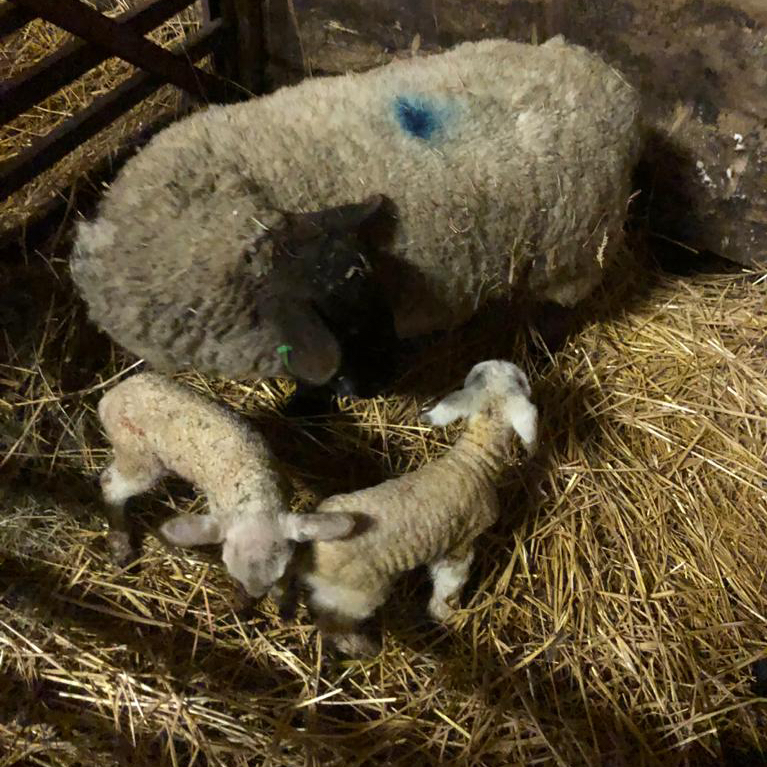
Lambing season is upon us so Rob has been on his flock’s beck and call so we may see less of him the next couple of weeks. So far 4/98 have been born!
The first two twins!
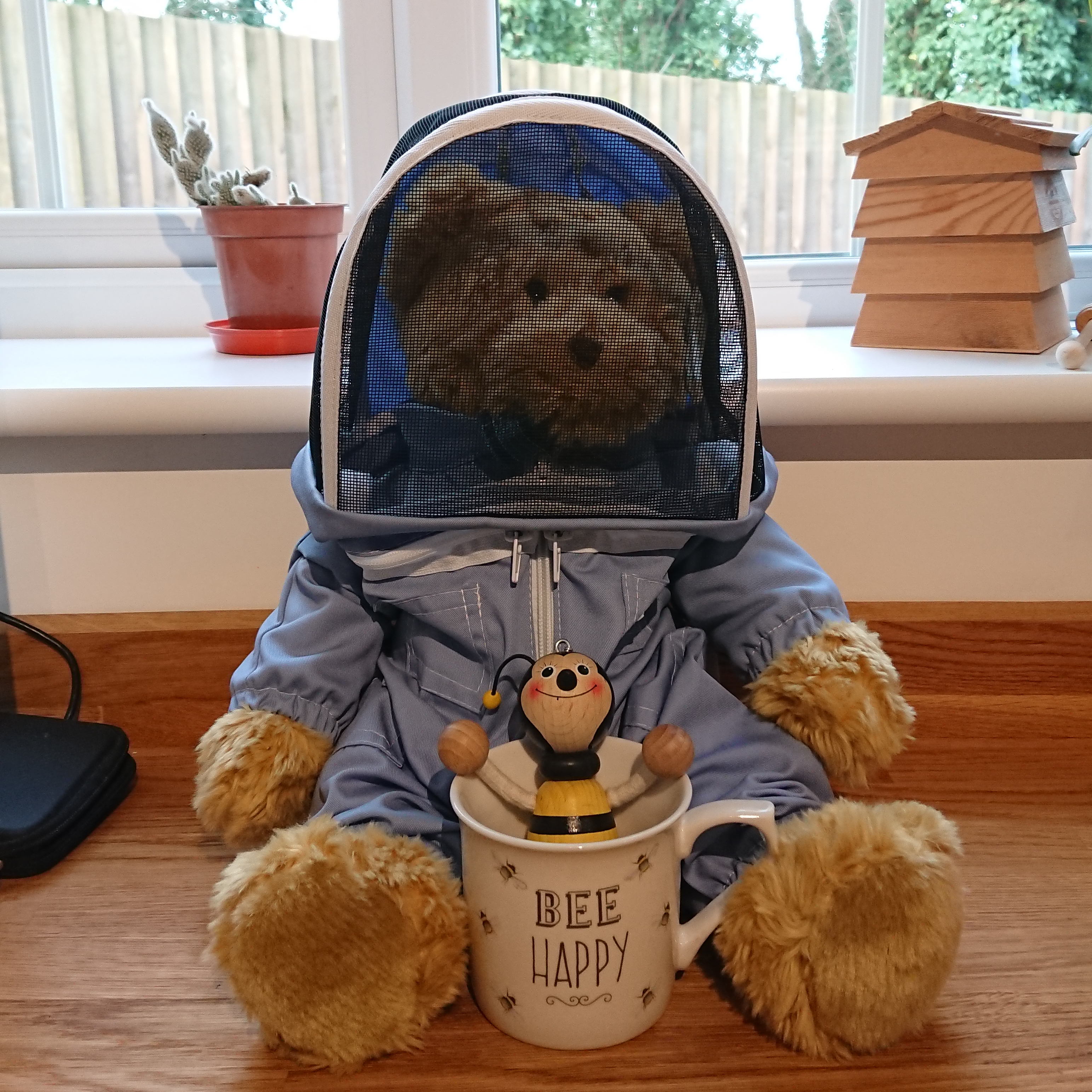
We attended last night’s wonderful talk by Chris Bird at Andover Beekeeper’s Association. Another huge turnout which was really lovely, some new faces too. Chris spoke about tree and plant health, diseases and pests threatening them and the implications of importing and planting non-native varieties. We held a raffle and I won Sian this little mug, she was extremely excited! She will now have to drink coffee more often in the office and stay motivated when doing her analysis of last year’s season!
‘Bee Happy’ Mug that we won!
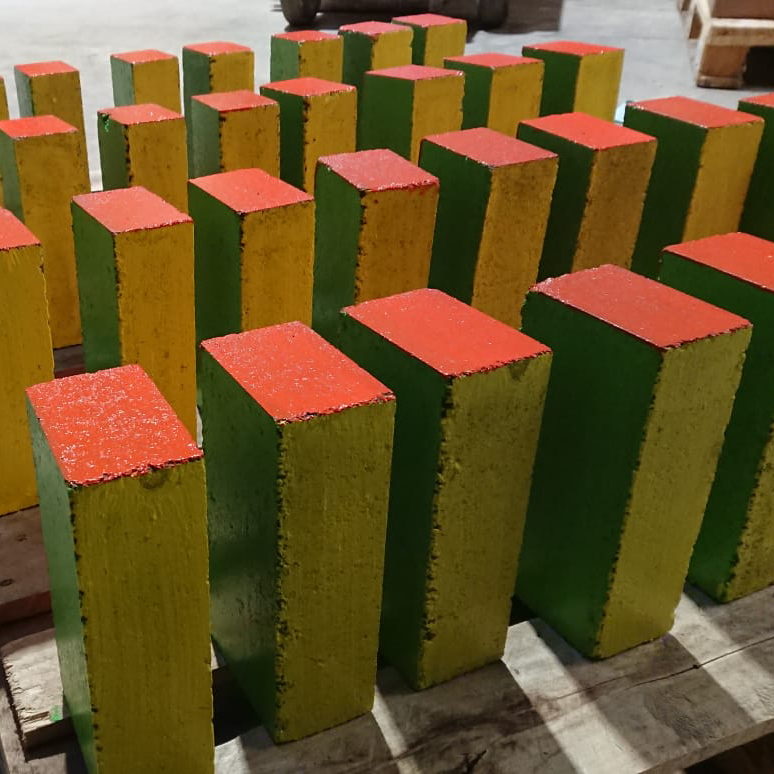
We’ve been keeping up with our fondant feeding, we’ve noticed certain hives going through the feed extremely quickly so we’re doing our checks fortnightly now. Another huge job to make our work a little easier by converting to a traffic light system with our bricks as well as pinning all of our nucs to indicate which breed of queen are in the nucs.
Ensure you have feed on your colonies! They’re looking strong!Traffic Light Bricks
Not much of an update really, but we do hope that everyone is enjoying the relatively mild weather that we’re experiencing too.
There are a number of things you need to keep in mind when doing a hive inspection. This can appear a little overwhelming at first, but once you are inspecting your hives regularly this becomes second nature. Each of these elements on the list are equally important as if there is anything out of sorts with even one, then your hive will become less productive and healthy.
Queenright
It is essential to ensure that your hive is what we refer to as ‘Queenright’ meaning that your colony has a normally laying queen. At certain times of the year your queen may go off lay and you won’t see any eggs. This would usually happen during periods of dearth when no nectar is flowing, or as the weather gets colder. Most times when we inspect a colony it is not essential to physically see your queen, if we have eggs this will usually be enough to confirm our colony is queen right. Once a honeybee egg is laid it stays in this stage for 3 days, therefore if you see eggs then you can be assured that your queen was present a minimum of 3 days ago.
Always check for the presence of queen cells too, these could be swarm cells which may be related to the ‘space’ element within your colony, or they could be supersedure cells. (See our separate post about what to do if you have queen cells).
So how can you tell if your colony is not queen right? Well, of course if there is no presence of eggs… But its not always quite that simple! Workers are also capable of laying eggs, but they are unfertilized, meaning they will only produce drones, you may also have a queen that has turned into a drone layer, this is a mated queen that has run out of her sperm stores.
The topic of identifying queenlessness in your colony is far too extensive to discuss here but we will soon be going into that in another post!
Can you see the Queen?
Stores
No matter how frequent your checks are, you should be looking at what stores your colony has. Do they have enough stores to sustain them until you visit them again? Take a look at the young larvae, do they have a good amount of royal jelly in the cells, or are they looking dry? If your colony is struggling for food the larvae may look dry.
When checking your colony for stores you do of course need to think about which point in the season you are in. Is there a strong nectar flow on? Is there going to be poor weather? Is there a lot of brood in the colony and therefore more mouths to feed? These are all questions you need to ask yourself to ensure that you can estimate if they have enough stores. Also remember that the stores don’t just refer to the honey, but also to the pollen present in the colony. Without adequate stores of the pollen the nurse bees will not be able to produce food for the growing brood. You may find that in a queenless colony your bees do not gather pollen, for this reason we always stop for a moment and watch the returning foragers as this gives us good idea if our colony is queen right with brood.
So how much stores should you need for a full-sized colony? This question is not quite so simple, and the answer will depend on where we are in the beekeeping season. As a rule of thumb, you may say that your colony should never have less than the equivalent of two full brood frames of stores in your colony. However, if we are in June or July and have big colonies 2 frames of stores with no new stores coming in is clearly not going to be enough for your bees. We would hope that in June/July we have a nectar flow on and our hives have supers on that the bees are packing nectar into so there will definitely not be food shortage problem. However, there is usually a break in the nectar flow during the season, this is called “The June Gap” (which is not always in June, it can be a lot earlier). Usually when the June gap hits, your colonies are nice and strong and therefore depending on how long the gap is your bees can eat their way through those supers full of honey very quickly! If this happens the amount of stores may be an issue, it is not unheard of for bees to die of starvation mid season due to a dearth in nectar flowing.
More stores are obviously needed to get your bees through the winter months, so the rule of the equivalent of 2 full brood frames of stores when we are in late September is also not going to be enough. Check out our post about winter preparations for your bees.
Commercial brood frame, note the stores at the top of the frame
Disease& Pests
The topic of disease and pests is so vast that it needs an entire blog post dedicated to it as well. We will just briefly discuss the importance of detecting disease early on.
During your hive inspection it is important to inspect larvae carefully, they should be well formed (clearly see their segmentation) and pearly white. Anything out of the ordinary is worth having a closer look at. Check all frames and see if you have similar larvae that is causing concern elsewhere in the colony. If you do see something that does not look right take good clear photos and show a fellow experienced beekeeper. If you want to revisit the same frame later use a queen marker or even your hive tool to mark the top bar of the frame so you can locate the frame again. There are some relatively common brood diseases that show now and then like chalk brood, sac brood, stone brood and bald brood. These are usually not much of a concern and you do not need to notify anyone. If however you do have larvae that looks like EFB (European Foul Brood) or AFB (American Foul Brood) you need to get in touch with your local bee inspector as these are notifiable diseases; contact details can be found on BeeBase.
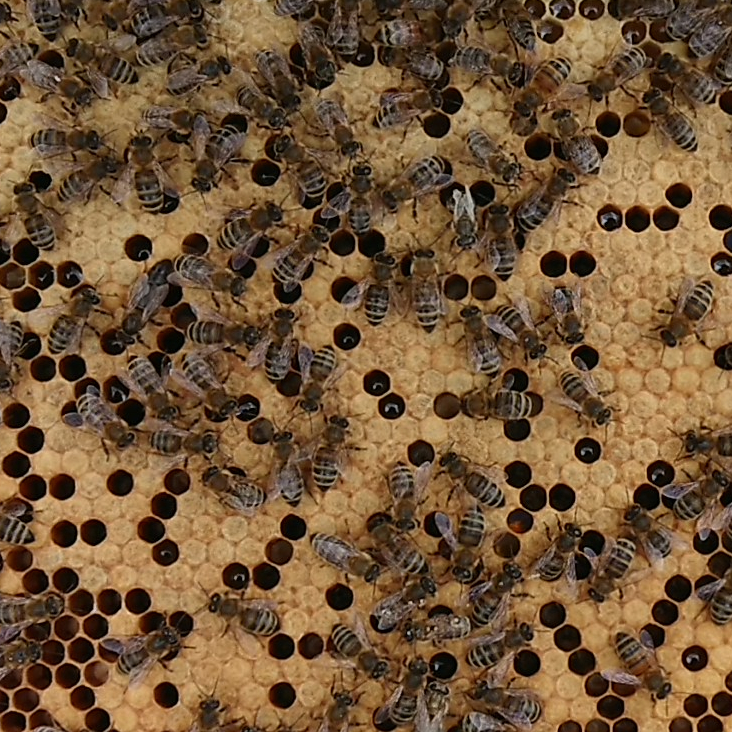
How does the pattern of your sealed brood look? Is it a good and consistent pattern or is it pepper-pot-ish? If the pattern is pepper-pot, by this we mean that the pattern has empty cells. This can be a sign of high brood mortality, the bees will have uncapped and removed any dead larvae thus leaving empty cells, or it could be diploid drones which do not survive to full development and again the bees will remove them leaving a poor laying pattern. A pepper-pot pattern can also be a result of a queen who is having difficulty laying.
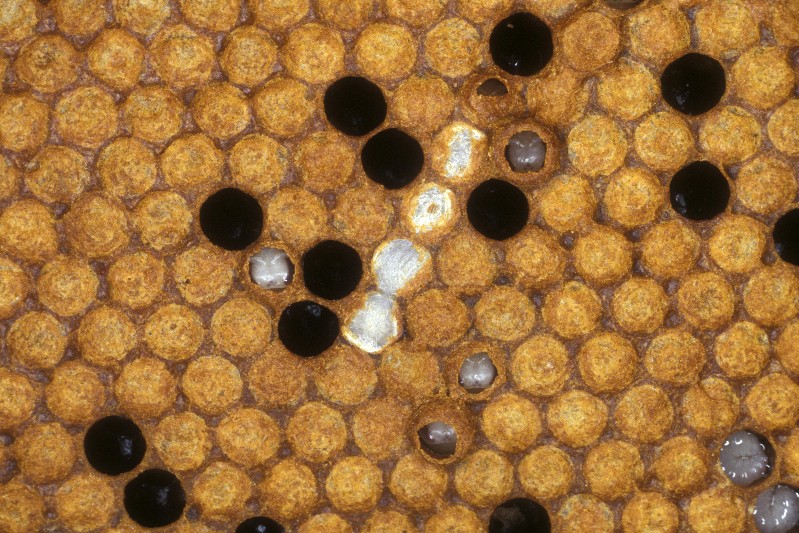
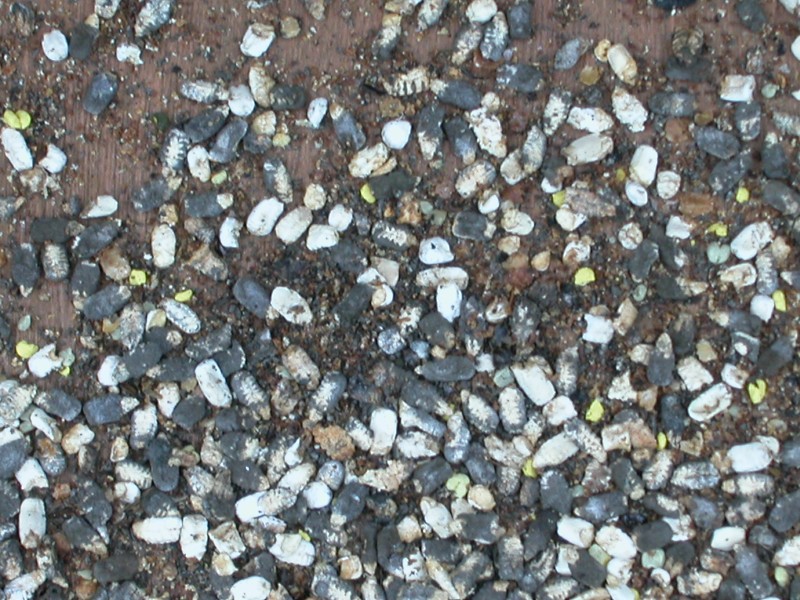
Chalk BroodSac BroodBald BroodChalk BroodChronic Bee ParalysisChalk Brood MummiesCourtesy The Animal and Plant Health Agency (APHA), Crown Copyright
Also have a look at the floor, are there a lot of dead bees that the colony are struggling to clear away or are there lots of dead bees outside in front of the hive? It is worth mentioning that you will most likely always see dead bees outside the hive after winter. Depending on how strong the colony is you may also find that you have lots of dead bees on the hive floor. A stronger hive will have plenty of workers who will keep a clean house and they may have removed them but a colony that is struggling will not have the man power to house clean. If however you are mid season and you see lots of dead bees there may be a problem. Also look at the adult bees, do they look healthy overall? Are their wings deformed or do your bees look hairless and shiny?
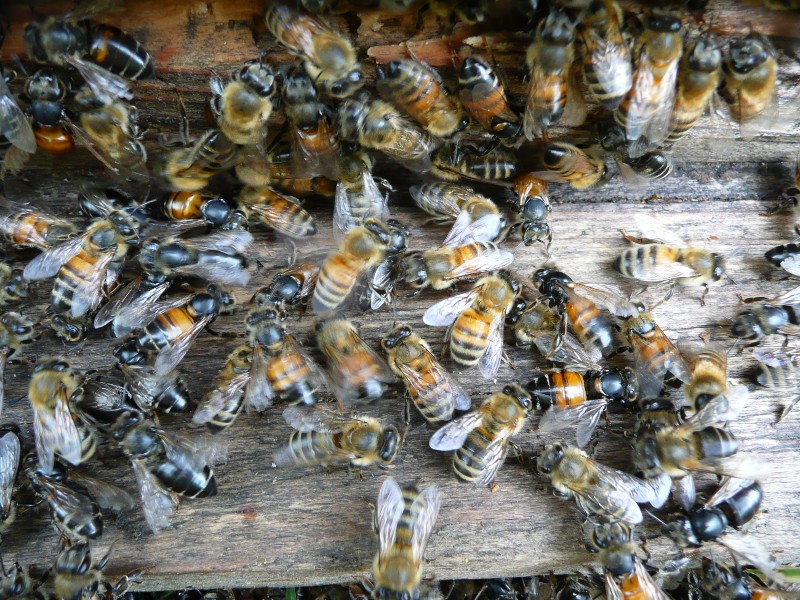
A few bees here with deformed wing virusDeformed Wing
In the case of varroa infestation, any damage can be averted as long as you treat before your mite levels are growing beyond your colony’s control. If you do see signs of varroa damage in the colony treat straight away. All colonies will have varroa however some bees will be better at tolerating / dealing with varroa then others. You can manage your varroa by proactively doing a mite count. We have a separate FAQ’s page covering varroa.
Shiny hairless bees may be chronic bee paralysis virus (CBPV). If you’re not well versed in the various diseases and pest damage, I would seek help and advice from an experienced beekeeper. You can also find lots of advice on BeeBase.
CBPVCBPVCourtesy The Animal and Plant Health Agency (APHA), Crown Copyright
Space
Whenever you are doing a hive inspection you should always be considering the available space for the bees. From the moment you take your crown board off you should be able to see if there is a suitable amount of space in either the brood box, or if you have supers on, space in the supers. As a rule of thumb, when you supers are full of bees, that means all frames covered in bees, you are ready for a new super. If you don’t have supers on your bees yet, then see how many frames your bees are covering in the brood box. If they are really congested, you may have seen evidence that they have started to build wax up through the holes in the crown board and into the roof! Be wary if they have done this as they may be so congested that they are pulling queen cells with a view to swarming – see our separate post on swarming!
It’s not only about giving the bees enough space to expand, it is also imperative to not be giving the bees too much space before they are ready. A smaller colony may not have enough strength in numbers to keep a constant temperature throughout the hive and as a result they may struggle to stop any brood from chilling.
On the other end of the spectrum, as mentioned above the lack of space pushes the bees to start thinking about swarming! All beekeepers want to avoid their colony from swarming because it takes a lot longer for a colony to become productive again. There is also the risk that the new virgin queen may not come back from their mating flight. Rule of thumb is that 1 frame of capped brood will become 3 frames of bees so as you’re going through your hive consider whether you may need to add supers. It seems obvious but do consider the time of the year, don’t be adding supers too late in the season as your colony will be reducing not expanding.
In Summary
I hope that gives you a good idea of the four main elements to keep in your mind when going through a colony. It may seem that there is a lot to remember, but as your experinece builds up these will become second nature and in time things that don’t quite look right will stick out like a sore thumb.
When first starting out it is always best to have a good mentor who can assist you when you’re going through your colonies, they may be able to spot things that you miss. Before you know it, you’ll probably become a mentor to a beginner beekeeper yourself!
Rob was initially my mentor before becoming my business partner!
Hello everyone! The team and I hope that you all had a lovely New Year and are looking forward to the beekeeping season ahead. It has been extremely mild over the winter (she says whilst the temperatures have plummeted over the weekend) and whilst inspecting our colony’s feed situations last week the girls have come out to greet us, as well as spotting a few bringing pollen back to their homes.
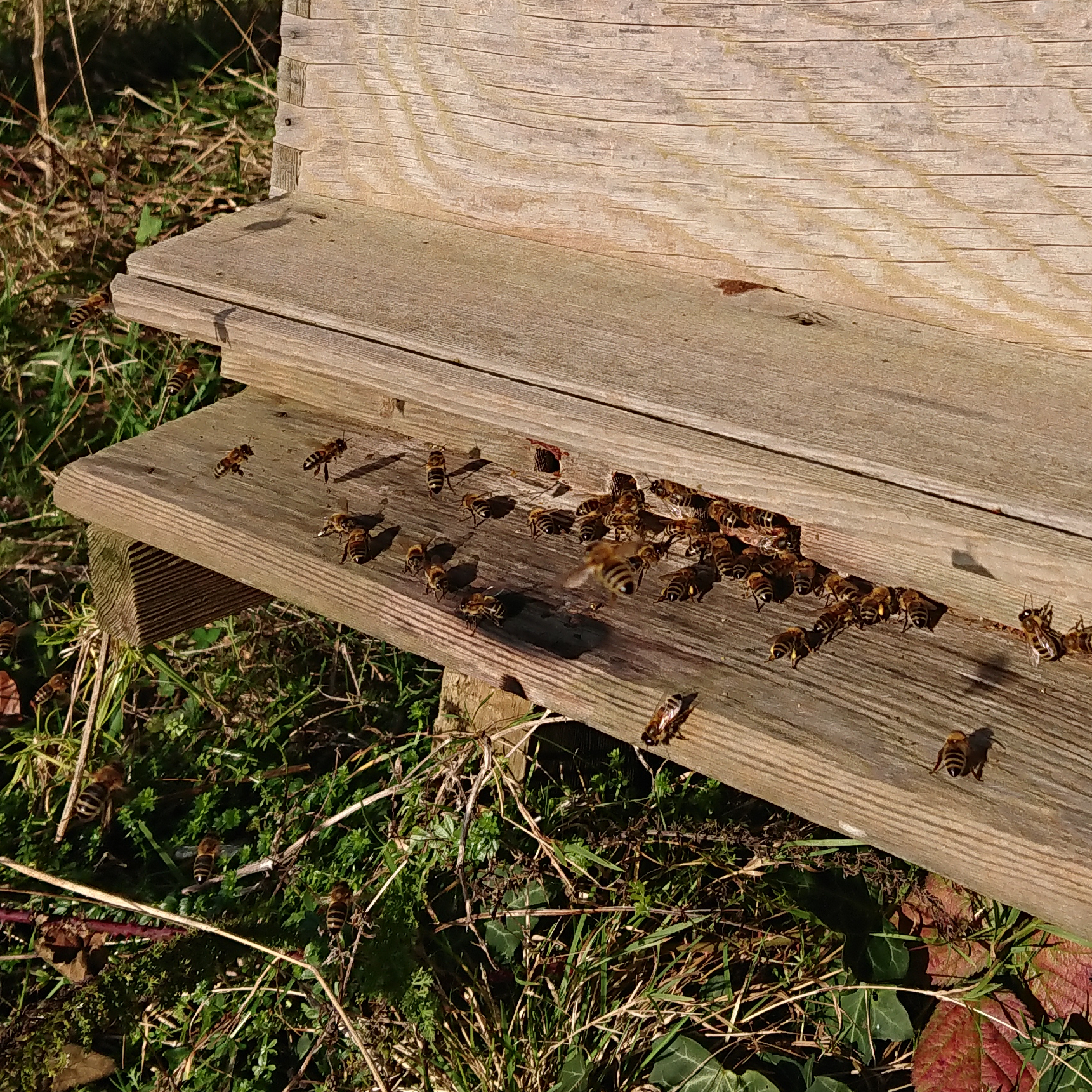
The workers looking far too busy for January, they may be bringing pollen from the catkins
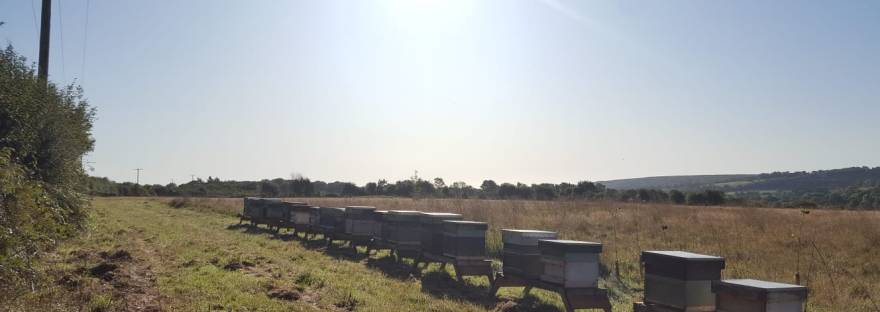
One of our new sites (waiting for bees) and catkins
It has been quite exciting being back after some time off, as some of you may know I had a short time away in Bulgaria snowboarding and only escaped with a few minor injuries! We’re receiving more and more nuc orders now we are into 2020 so if you would likes bees from us this year please don’t leave it to late to get your orders in.
We are really trying to be more in tune with social media (our facebook, instagram & twitter). We started our in depth ‘Beginner’s FAQ‘ with our first post being an analytical piece ‘How Much Does it Cost to Start Beekeeping in 2020?‘ which has already proved to be extremely popular! We’re so pleased that there is more interest in our blog which has always been present but not the most viewed part of our socials, we’re hoping that our experience as bee farmers will be able to help others in the long run.
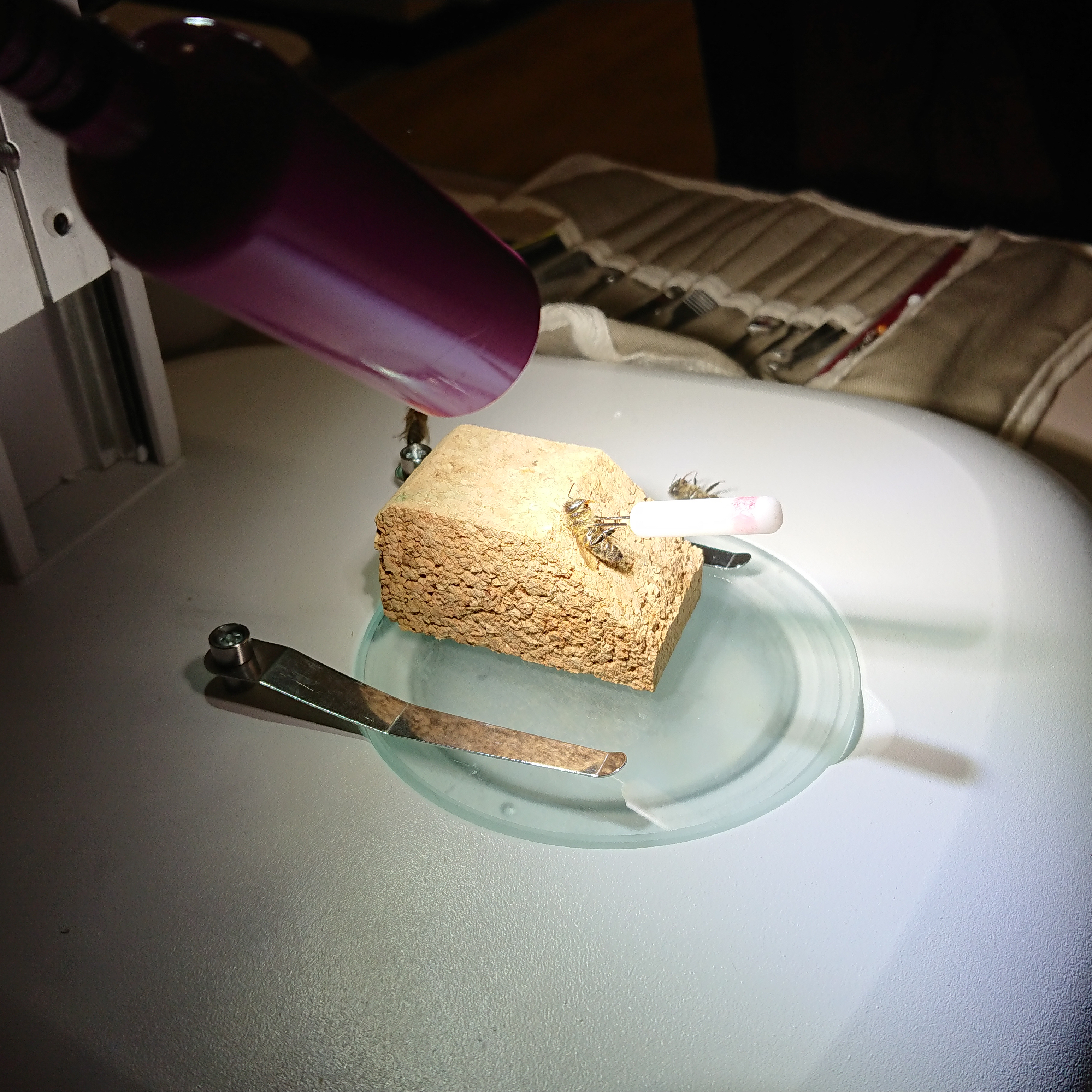
Sian and I headed to our first talk of 2020 at our local beekeeper’s association which was very illuminating! The talk was called ‘Wings, Stings and Other Things’ and involved honeybee dissection to show us honeybee anatomy and it was absolutely brilliant. James Donaldson manipulated the honeybee to show us how the wings and stinger operates and talked us through the digestive system, I think I can say for the whole of the association that we all learnt something new!
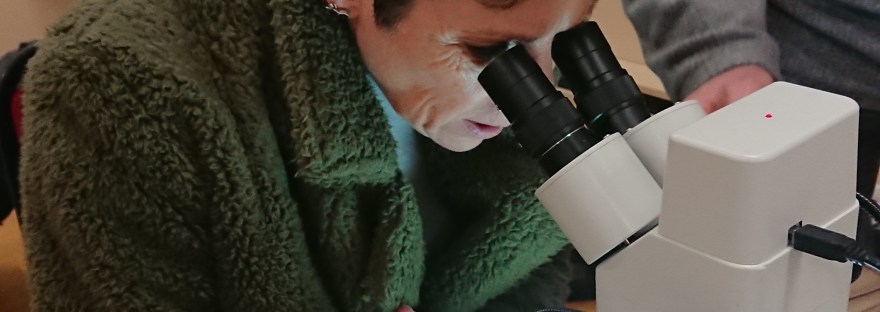
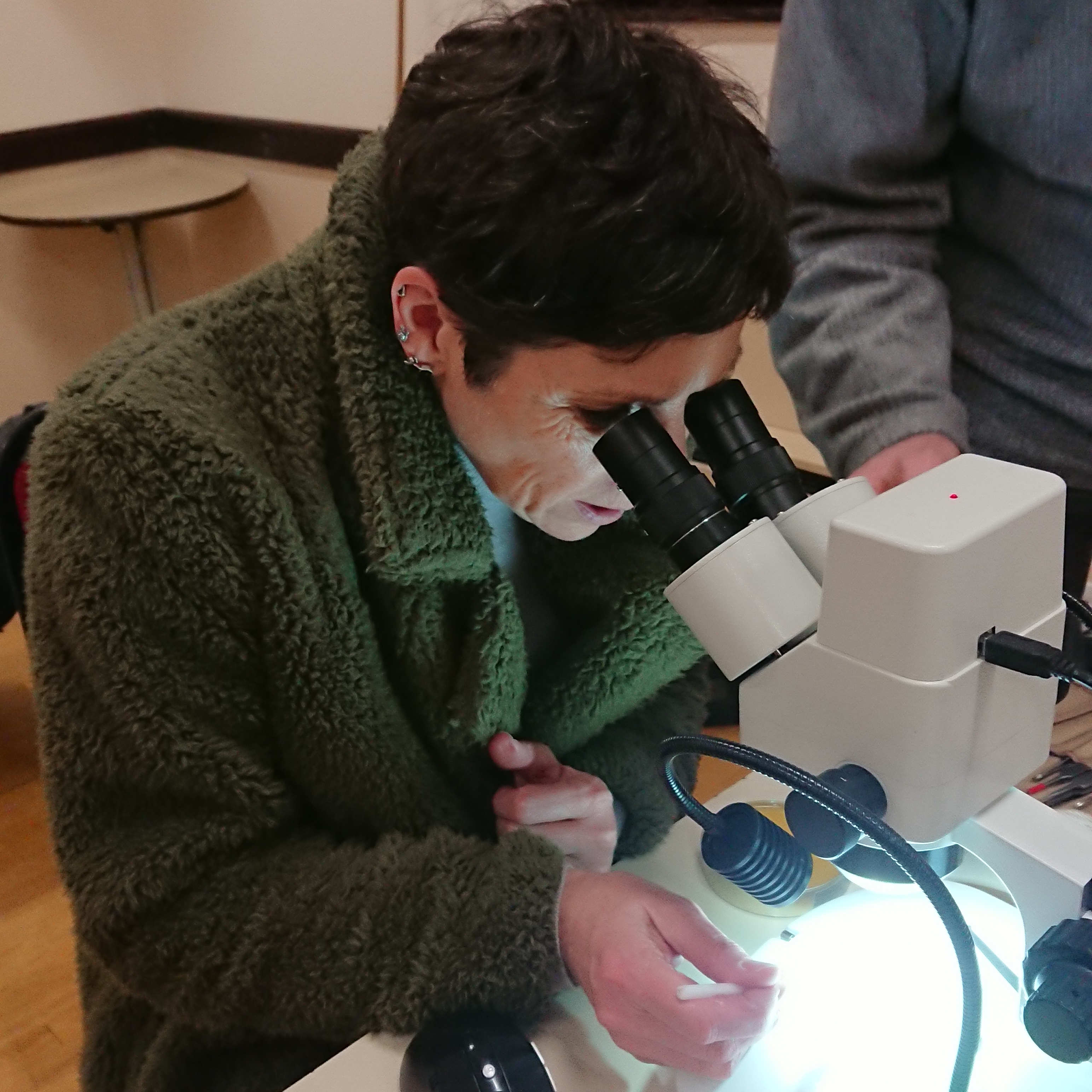
Me trying my hand at carefully dissecting a honeybee
We’re now looking to attend a microscopy course this year to enhance our skills as beefarmers, not just to advance our understanding of honeybee anatomy, but hopefully to analyse our own pollen and possibly diagnose diseases (though fingers crossed we’d not find the need for that!)
We had a huge(ish) overhaul of our unit and decided to move some of our shelving units upstairs and move our glass jars downstairs (yes we were stupidly carrying box after box of jars up and down the stairs). It is certainly much more spacious and is making it much more of a pleasure to work there.
Rob refitting our shelving upstairs (Sian’s bunkbed)
Our Rob is currently in Spain where it is unfortunately raining! Can you imagine? After all that rain here he thought he could escape to warmer climates but the rain had followed him! He is only away for a week but that means no collections from Headley until 27th January.
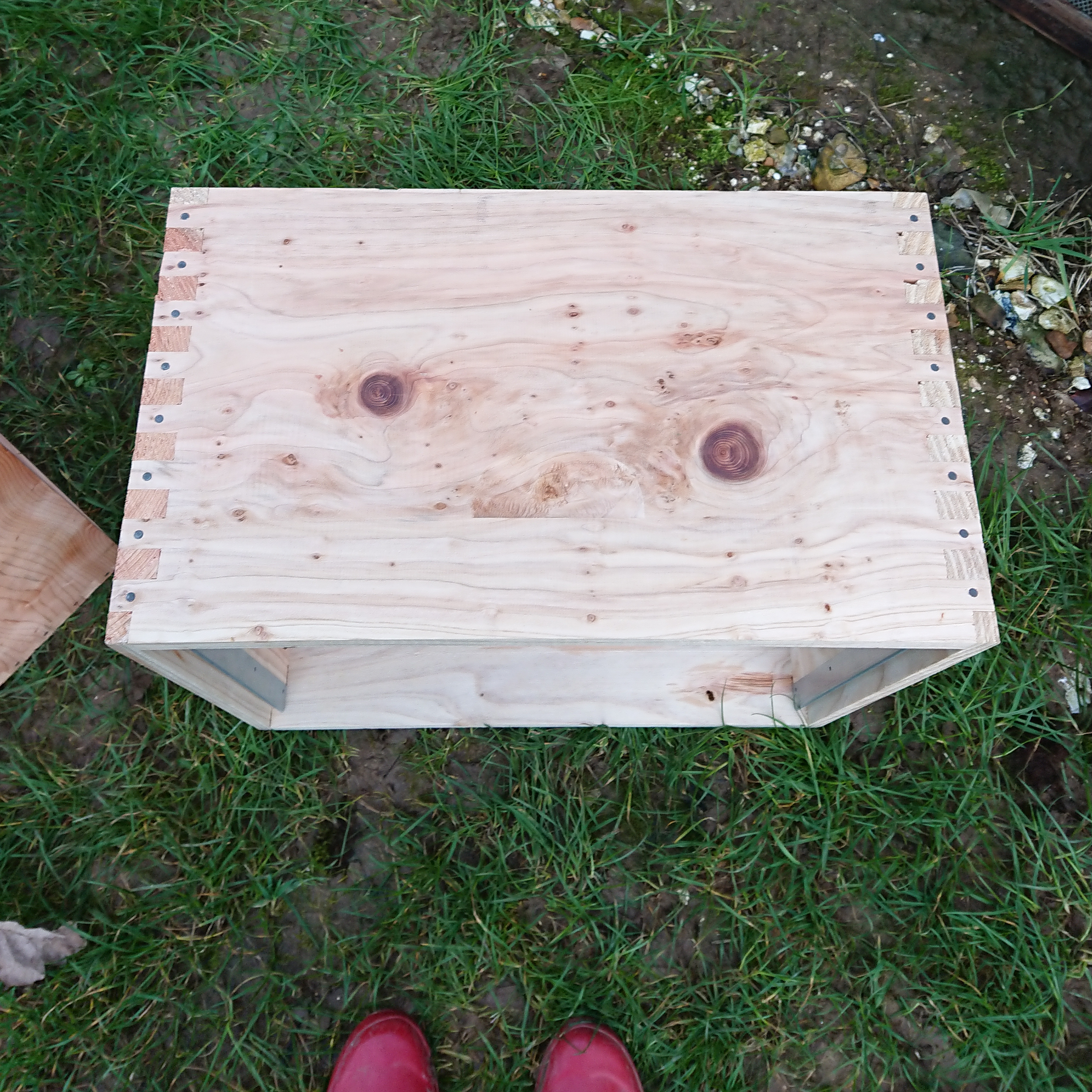
A terrified looking commercial brood box D:
To those who haven’t started feeding fondant, please make sure that you continue checking the weight of your hives, in the warmer weather the colony can burn through their stores super quickly. We always recommend putting a pack of fondant on at this point in the year. If your bees don’t need it you can remove it wehn you do your spring checks and wrap it back up again. However it may save your colony if they do need it! Remember some weight can be attributed to late flowering ivy which the bees may not be able to break down since it sets so solidly in the cells.
We hope things are looking good for all our fellow beekeepers and bee farmers, fingers crossed for minimum winter losses.








 Beckys Beezzzs